

I am reading “Men Are from Mars, Women Are from Venus” in a vain attempt to discover how women think. Although the following questions are not actually in the book, they suggest themselves if one reflects on it:
Q: Why do men become smarter during sex?
A: Because they are plugged into a genius.
Q: Why don’t women blink during sex?
A: They don’t have enough time.
Q: Why does it need millions of sperm to fertilize one egg?
A: Because they don’t stop to ask directions.
In bed, I said to my wife, “I’m going to make you the happiest woman in the world.” She said, “I’ll miss you.”
Q: What does it mean when a man is in your bed gasping for breath and calling your name?
A: You did not hold down the pillow long enough.
A black man took an American girl from a nightclub. She said, “Show me it’s true what they say about black men...” So, he stabbed her and took her purse.
My favorite advertisement: “Optimistic man, 35, seeks a blonde 20-year-old double-jointed super model with an open-minded twin sister.”
* * *
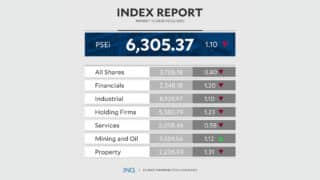
Last week was the worst week I can remember since the 9/11 attack. The Philippine Stock Exchange index has lost two-thirds of all the gains it made in 2007. I think selected local blue chips are cheap, and with the risk factor so low, I am looking for a short-term recovery.
The foreign selling never stops and has been going on for nearly two months. Even last week, it reached P1.5 billion on Thursday and P1.0 billion on Friday. Only when it ends will we reach the bottom; but purely on fundamentals, stocks are cheap.
We should be less affected by a possible recession than Japan or South Korea, as we are not a major exporter and rely on our overseas foreign workers to cover up the massive annual trade deficit.
Despite all the gloom and doom, I remain unconvinced that the US will go into recession. First, we must define what a recession is. It occurs when a country’s gross domestic product (GDP) declines for two successive quarters. At present, America’s fourth-quarter GDP growth is still positive, probably 1.5-2.0 percent. Next quarter, it will undoubtedly slow down, but I doubt whether it will turn negative either then or in the second quarter. So, a severe disruption to the economy is certain and Federal Reserve Chairman Ben Bernanke and President Bush are well aware of it, particularly in an election year, but I don’t expect to see a recession as defined above.
The fall in the job-creation figures was a real shocker, from 115,000 to 18,000, but I think it is an aberration and that the next monthly figures will rise to 50,000 or more. Even if my figure of 50,000 is correct, that would not be sufficient to prevent the unemployment figure from rising and I would not be surprised if it eventually reaches 5.5 percent, but this is still reasonable. A few years ago, Germany and France had unemployment averaging 10 percent. As for our unemployment and underemployment figure, I would rather not burden you with it.
In his speech before Congress, Bernanke was strongly in favor of economic stimulus but left it to them to determine its form and substance. It looks as if it will be around $150 billion and it should be distributed in such a way as to reach poor and middle-income families quickly so that they will spend it. Personal spending is what drives the economy so giving tax rebates to people who do not pay tax is not very helpful. Personal allowances and child allowances are the most effective as poorer people have more children. Obviously, both parties will have different priorities but the nation is in crisis so they must come to a compromise quickly.
Everybody, myself included, is expecting a 50-basis-point cut on Jan. 31 with more to come in succeeding months. An eventual low of 3.5 percent seems likely but 2.5 percent looks too extreme. I have some sympathy with Bernanke when he says it is not the job of the Fed to bail out people who make bad bets. If they lost money in the stock market or commodity market, nobody would expect the Fed to come to their aid so why should it be any different with respect to property. There should be a limit on how much unscrupulous mortgage brokers can charge and any excess should be declared illegal and not payable.
The losses and write offs announced by Merrill Lynch and Citigroup were worse than expected and already total $100 billion. More bad news is expected later this week and by the time all the bad news is out, the figure could double.
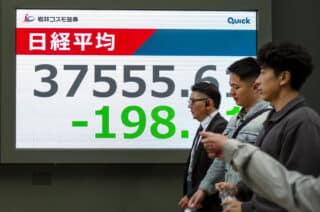

Singapore’s electronic exports have dropped every month in the worst slump in 5 years. Japan’s chances of going into recession are rated 50 percent and Japanese exporters such as Toyota, Honda, Sony, etc. have been hit by the stronger yen (weaker dollar). China sells 19 percent of its exports to the US so it must be affected to some degree but growth is still expected to be at least 10 percent. India is expected to grow at 8 percent but with exports halved as the rupee is very strong. Only Taiwan’s stock market is rising because the newly elected party is closer to China and therefore trade and investment are likely to benefit from a closer association.
China has raised bank deposits for the 11th time in 13 months and ordered food producers to seek approvals for price increases as inflation has already reached 6.9 percent. China is adopting all the correct measures to cool the economy and reduce inflation. It is certain that the yuan will be allowed to appreciate faster than before.
A similar situation is brewing in my home country where the economy is now showing signs of fatigue. The ratio of house prices to income is appreciably higher in the UK than in the US so that the fallout will probably be even more severe. The Bank of England’s rate is 5.5 percent (one percentage point higher than the Fed rate), so there is room for larger cuts. But last week the Bank of England left interest rates unchanged. What the Bank of England does is interesting because Alan Greenspan advises it, so we have an opportunity to see how the two gurus react in similar circumstances.
On Monday, foreign selling on the Philippine stock market was again P1 billion, so there is still no end in sight.
US Fed must cut 50 basis points – 01/15/08
All markets in disarray – 12/18/07
Death by a thousand cuts – 12/11/07
The worst is over – 12/04/07
Slowdown or recession? – 11/27/07