Amid all the hype about our country?s favorable economic indicators, the fact remains that its benefits have not trickled down to the poor, most especially the rural poor. In fact, a social weather survey conducted last Sept. 2-5, 2007 revealed that a new national hunger record was set, with 21.5 percent of households reported as suffering from hunger, without having anything to eat, at least once during the three months preceding the survey.
What is wrong with our development model? Isn?t it ironic that with increased GDP growth, reduced fiscal deficit and other favorable economic parameters, we are faced with the growing reality of undernourishment and hunger among our rural poor?our citizens who ironically enough, produce the bulk of our food?
I can only offer a perspective, from one who spent a few years in government, from one who has spent all his working life in the rural areas not only working with the private sector but also with NGOs and peoples? organizations.
When I started to prepare this speech, I retrieved my past speeches when I was still with the government in the early ?90s. While rereading my past speeches, I started to get a feeling of ?déjà vu? because after almost two decades and 25 million more Filipinos, we are still talking about the same problems and, in many cases, have become worse.
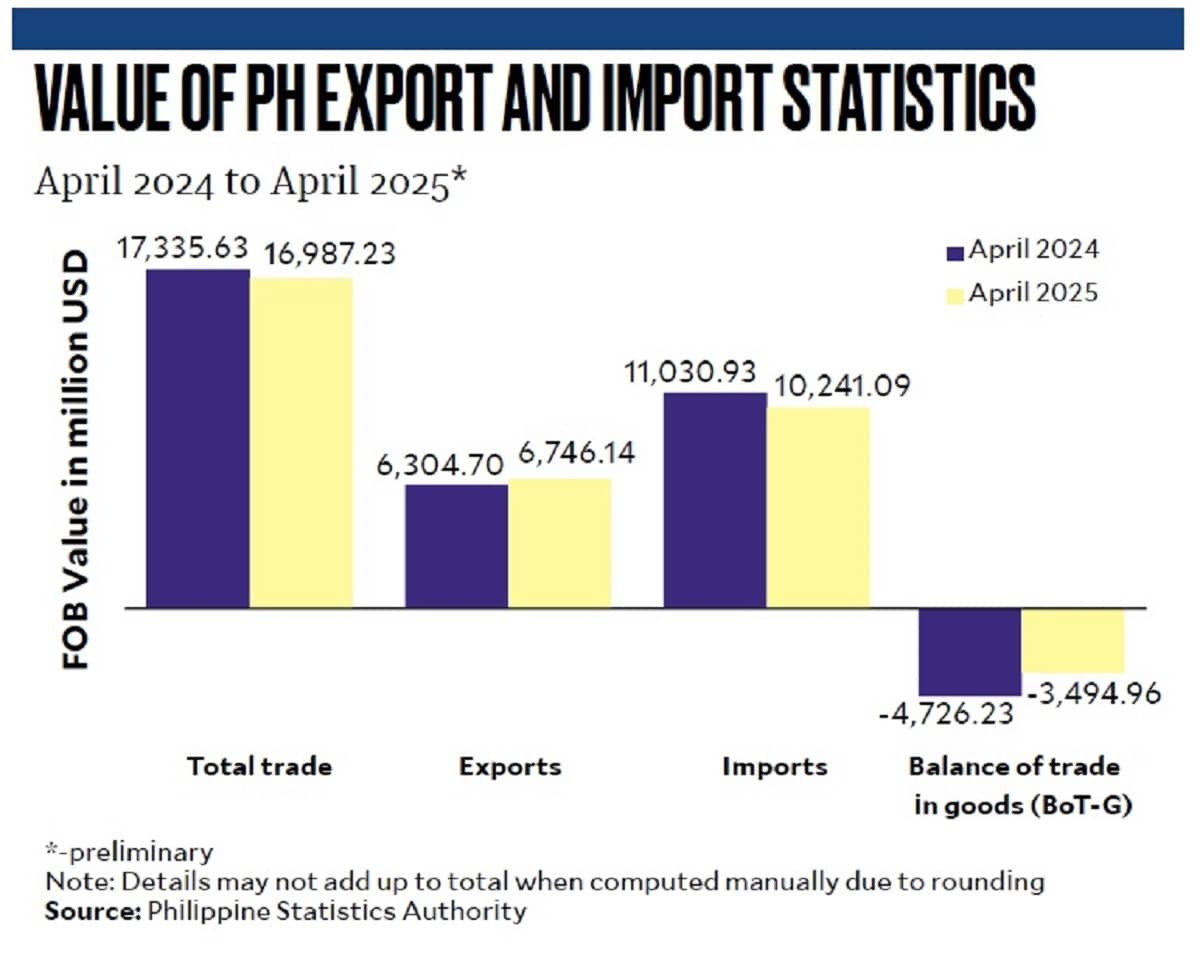
From a net agricultural exporter, we are now a net importer. From being self-sufficient in rice and corn, we now import substantial quantities of these grains.
Our rural poor, instead of declining in number has now increased. Indeed, broad-based development would be a far fetched ideal unless we address the urgent needs of our rural poor.
We are worse off today than in the past decade or two because we have severely underinvested in agriculture, where most of our rural poor are engaged in. I don?t have to convince you that output is very much related to input. You have to plant first before you can harvest. What we are spending today in real terms per capita is even less than in the past.
One does not have to be an economist to understand that our widening agricultural trade deficit signifies a continuing underperformance and a decline in our competitiveness. Whereas foreign farmers continue to be heavily supported by their governments, the Filipino farmer is hardly getting any. Worse yet, instead of providing for the promised safety nets when we lessened the tariff protection afforded our farmers, we continue the benign neglect of our farmers and fisherfolk.
When I say we, it means both the public and the private sectors. Let me first discuss then why public sector investment in agriculture and agri-related infrastructure and services is much less than what it should.
Considering the realities of our political system, the agriculture sector in the country, does not have a strong political voice. With the fragmentation of rural lands peopled with small farmers, our rural folk do not have much economic power. And as we are well aware, economic power begets political power and vice versa.
With a weak political voice, politicians and government can afford to continue paying lip service to the needs of our small farmers. In other countries, when farmers speak up, government and politicians listen and take heed of what they need.
Advocacy needs to be complemented with political skill and political support to induce the desired political will communication and advocacy are fundamental to consensus building and thus significant amounts of resources must be invested in the process.
The challenge therefore is how the agriculture sector can speak up with a united and strong political voice. Unless it is able to do so, I am sorry to say that the same strategy as used in the past will just produce the same outcome.
However, one may ask, why hasn?t the private sector taken up the slack in public sector spending? Shouldn?t the development of the agriculture industry be private-sector led anyway?
Unfortunately, private investment in agriculture has come in trickles. Agriculture Secretary Arthur Yap recently stated that more investments in agriculture are needed if the country wants to achieve the target of halving the number of ?extremely poor? by 2015.
He noted that a recent world bank report had underscored this need and stressed that more funds in the farm sector could substantially reduce the number of ?extremely poor? or those living on $1 a day.
Government statistics show that the agriculture sector receives only a paltry share of total investments. BSP reported that as of March 2007, only 6 percent of all outstanding loans went to agricultural projects. According to the board of investments, less than 2 percent of total direct foreign investments in 2006 went to agriculture.
Considering that agriculture accounts for a fifth of the country?s gross domestic product and employs nearly 2 out of every 5 Filipino workers, these loan and investment numbers were very little indeed.
Small farmers
The agriculture sector is dominated by small farmers due to the fragmentation of rural lands because of agrarian reform. With the government?s failure to provide the necessary support services, we just continue to plod along with no significant improvements in productivity and quality of life as originally expected of the program. The challenge here is how to reconsolidate these rural lands for possible lease and/or contract-growing for a fully integrated and very productive rural enterprise which can compete not only with imports but in the global market as well.
Cooperatives have a pivotal role to play in this process of consolidation and integration as the small farmer, left by himself will definitely have almost no access to what he needs to make his land more productive and more profitable.
As indicated earlier, private investment in the agriculture sector has been very limited especially in Mindanao which has many of the poorest provinces in the country but at the same time has the greatest agricultural potential.
With a few exceptions, the people with resources hesitate to invest due to the prevailing peace and order problems in some areas that have plenty of good but idle or under-utilized lands. They say that there should be peace first before development.
However, many people believe that development and peace go together without one preceding the other. Only real development can bring about an enduring peace which has continued to elude us for decades. As long as we have the Mindanao problem, the image of our country as an investment destination will continue to be tainted.
Peace in Mindanao
I firmly believe that peace in Mindanao can only be achieved with the help of the business sector. With more investments, more jobs will be generated and together with its multiplier effects will directly contribute to the alleviation of poverty which is one of the root causes of the peace and order problems in Mindanao.
One of the businesses I am associated with, La Frutera Inc. ventured into one of the previously conflict-ridden areas in Maguindanao. The company established a large-scale banana plantation using up-to-date technology and infrastructure.
Our experience for more than 10 years has shown that we can produce globally competitive bananas operating under a different cultural setting. Employing hundreds of Muslim rebel returnees, the company has demonstrated that a business can be successful by integrating the community?s cultural system into the way we do business.
It is a business model on how to maximize resources while promoting the community?s socioeconomic development and of how development can bring about peace. This experience can certainly be replicated elsewhere with a few companies already following suit.
As mentioned earlier, increases in government spending in rural infrastructure and related services must be substantially increased in order to make up for past neglect. In allocating investment resources, the public sector needs to focus on areas that present large externalities where the private sector would normally underinvest; where the government?s investment would act as a catalyst to attract private investment; and where the government is needed to address equity and long-term or broader development issues that are not normally tackled by the private sector.
Increases in government spending has to be accompanied by increases in private sector investments due to the hesitancy of many investors to come in for individual projects because of perceived higher risks. I have suggested in a few speeches last month, the possibility of putting up a private-sector led agribusiness investment fund.
The fund, which should be large enough, say P50 billion, can invest in existing businesses which require capital for expansion and some greenfield projects. Investments in agriculture, agro-industry and tourism would be the likely candidates as we still have some comparative advantages in these areas.
Development of the rural areas cannot be based only on agricultural growth. Rapid growth of both agriculture and the nonfarm sector is required.
Agriculture fund
The investment mix should be such that the projected economic returns are good enough for investors. In a way, we are pooling resources and diversifying the risks and returns.
More details need to be fleshed out later if this investment option will generate enough interest.
Considering the billions we have spent in the past and the incalculable loss of lives and dislocation of people, perhaps it is about time to seriously consider this option.
If this fund can be leveraged with additional equity and debt financing, imagine how significant the impact can be on the lives of the people.
If after leveraging, total resources come up to P100 billion, this investment fund can directly generate a million jobs assuming P100,000 is sufficient for the creation of each job.
Even as we discuss this possibility, it is ironic to hear that both GSIS and SSS are looking at investing a billion dollars each in foreign financial markets due to the limited absorptive capacity of the domestic financial markets.
Getting even a small slice of these funds invested in financially viable rural enterprises would give a positive signal to many interested investors from the private sector.
In the context of a rural development strategy, we cannot overlook three important areas, namely, population, education and good governance.
With not enough investments, it is not surprising that growth of Philippine agriculture has not kept pace with our growing population. Food production must be accelerated if it is to keep pace with population growth. This becomes all the more urgent when we consider that a fertility gap exists between rich and poor, and urban and rural families thereby exacerbating inequity in society.
Higher rural fertility explains why, although poverty incidence in the countryside has dropped, the absolute number of rural poor has increased. The inability of agriculture production to outstrip population growth, coupled with inequities in distribution, confront us with the growing reality of undernourishment and hunger among our rural people.
That is why we must review our existing policies and programs regarding population planning. Our people, especially those in the rural areas, have to be aggressively informed of their various options regarding family size and make available to them what their needs are.
This is particularly important for the poor since they have limited financial means.
Population growth
A policy paper of the UP school of economics of December 2004 on ?Population and poverty: The real score? concluded as follows: ?Rapid population growth is a critical national concern. It impedes economic growth, worsens inequality and exacerbates poverty. A sound population policy must be part of good governance to promote faster economic growth, lower inequality and hasten poverty reduction. A national population policy, at the core of which are well-funded family planning programs that provide accurate information and access to all methods of contraception, is pro-poor, pro-women, pro-people and pro-life.?
With regard to education, we are all well aware of what the problems are. The Filipino is our greatest resource as a nation. Yet we have severely underinvested in the past in providing him quality basic education and technical training.
There is universal agreement that building up the human capital of the poor is the most effective way for enhancing productivity and capacity to earn higher wages.
Since labor is the most important asset of the poor, ensuring that they, or their children, get high returns on this labor is therefore the surest way of giving them a path out of poverty.
In this highly integrated and globalized world economy, having adequate education is an imperative. Many of our unemployed in the rural areas suffer from this lack.
That is why, the country especially the public sector needs to invest more in education not only to keep whatever advantages we have left but more importantly to equip our people for gainful employment and entrepreneurial opportunities.
Special focus
Since the majority of the Philippine poor are in rural areas, there must be special focus in assisting small farmers, landless farm workers, subsistence fisher folk and other rural dwellers and their children to have greater access to quality basic education and technical training.
As to good governance, survey after survey indicates corruption permeating all levels of government, especially agencies involved in revenue collection and public works. To provide the necessary funding for more basic services to the poor, increasing our tax collection efficiency is a must and needs to be pursued more vigorously and relentlessly.
Corruption takes away money from programs that could ease poverty and boost development. Incompetence and mismanagement leads to waste of public funds to the detriment of pro-poor programs.
In the end, what is needed is strong and honest political leadership to trigger any lasting stability and economic growth that will lead to more broad-based development.
Today, there are 30 million Filipinos who continue to feel neglected, growing resentful of being marginalized and mired in poverty. Surely, we cannot continue to turn a blind eye to the ordinary Filipino. We must continue to seek ways and means of how to help him get out of his distressed condition.
When people are determined to help themselves, when business is willing to reach out and share its distinct competence, and when government finally decides to extend a helping hand, no burden is too heavy and no goal is unreachable.
* * *
(The article reflects the personal opinion of the author and does not reflect the official stand of the Management Association of the Philippines. Based on the speech delivered by the author during the 45th annual meeting of the Philippine Economic Society at the Bangko Sentral ng Pilipinas on Nov. 14, 2007. The author is chair of the MAP Agribusiness and Countryside Development Committee and president of Ultrex Management and Investment Corporation. Feedback at mapsec@globenet.com.ph.)