Article Index |Advertise | Mobile | RSS | Wireless | Newsletter | Archive | Corrections | Syndication | Contact us | About Us
SEARCH WEB INQUIRER Powered by: Google
Fri, May 23, 2008 03:57 AM Philippines      25°C to 33°C
  HOME       NEWS     SPORTS     SHOWBIZ AND STYLE      TECHNOLOGY     BUSINESS     OPINION      GLOBAL NATION    SERVICES
Advertisement
Robinsons Land Corp.
Mind and Body

INQUIRER ALERT
Get the free INQUIRER newsletter
Enter your email address:

LOTTO
2 Digit Result: 23 01
3 Digit: 2 7 3 • 1 8 0 • 3 4 0
6 Digit: 9 7 4 9 7 1
SuperLotto 6/49 Winning Numbers:
20 42 33 22 39 45
P 114,409,378.80

CITYGUIDE
Search the city for:
Powered by:

Affiliates

 
Money / Top Stories Type Size: (+) (-)
You are here: Home > Business > Money > Top Stories

  ARTICLE SERVICES      
     Reprint this article     Print this article  
    Send as an e-mail     Send Feedback  
    Comment on this article on our Vox Populi blog  

  RELATED STORIES  


imns


Peso seen hitting 39 to $1 this quarter

By Doris Dumlao
Philippine Daily Inquirer
First Posted 19:23:00 02/03/2008

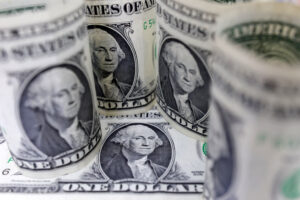
MANILA, Philippines--GLOBAL BANKING GIANT Citigroup sees the peso surging further to 35 against the dollar by yearend and the Bangko Sentral ng Pilipinas slashing its benchmark interest rate by 75 basis points to temper the influx of speculative offshore funds this year.

“The outlook is a very bullish peso and it’s not just because of the (macroeconomic) fundamentals,” Citibank economist for the Philippines Jun Trinidad told high net worth Citibank clients during an advanced Chinese New Year party for Citigold members last week.

“It will be 35 to $1 by yearend and we’re looking at 39 before the (first) quarter is over,” he said.

Aside from the attractive interest rate differentials and the sustained influx of remittances from overseas Filipino workers, Trinidad cited the more than $43 billion in foreign exchange reserves amassed by the Bangko Sentral ng Pilipinas, which factored in about $10 billion in cash locked up in currency swaps and not yet booked as part of the BSP’s official gross international reserves (GIR).

“These are dollars that they have bought from the market and swapped for pesos to get the liquidity arising from the stock market purchases (of offshore investors). So in short, these are the dollars that they own which will get back one month or two months from now and swap back from pesos which they have not booked in their regular dollar book,” Trinidad said.

The country’s GIR stood at an all-time high of $33.7 billion in 2007 as against the $22.97 billion the year before. This GIR is a key indicator of a country’s ability to cover the foreign exchange requirements of its economy, consisting of the central bank’s gross foreign currency holdings, gold reserves, foreign investments and special drawing rights from the International Monetary Fund.

“This stock of dollars is one of the reasons why with or without a US recession or with or without the US Federal reserve rate cut, especially with $14-$15 billion remittances still coming in that will still aggravate the stock of dollars,” Trinidad said.


The economist said the stock did not even include the pool of dollars generated by the banking system’s foreign currency deposit units (FCDUs), considered as a third layer of the country’s foreign reserves.

As of end-2007, the banking system’s FCDU deposit liabilities increased to $18.26 billion from the previous year’s $17.9 billion.

He said part of the large dollar pool could in turn be used to further pare down the country’s foreign debt and improve the Philippine sovereign credit rating, which already got a strong boost recently from the “positive” outlook (a basis for potential upgrade in the next 12 to 24 months) given by credit watchdog Moody’s Investor Service.

Trinidad added that the current level of domestic interest rates was also providing attractive differentials versus low-yielding assets abroad, especially with the 125-basis point reduction by the US Fed on its benchmark interest rate in the last two weeks alone.

“You may not have the appetite to go to two-year peso bonds now but compared to two-year treasuries, you’re better off holding the (peso) bonds,” he said.

But Trinidad said the BSP would likely take its cue from the US Fed by cutting its own benchmark rate by a total of 75 basis points to 4.5 percent this year. Last week, the BSP slashed its overnight borrowing rate by 25 basis points to 5 percent, the lowest level seen since the independent central bank was created in 1993.

“The differential will certainly attract speculative funds and that will hasten or accelerate the appreciation of the peso to the dismay of dollar earners such as the exporters,” Trinidad said.

Trinidad said he expected the BSP to lower its overnight borrowing rate to 4.75 percent by March and further to 4.5 percent by June.

“At 4.5 percent, it will provide part of the ammunition or arsenal to help the Philippine economy be less vulnerable to offshore whims,” he said.


Copyright 2008 Philippine Daily Inquirer. All rights reserved. This material may not be published, broadcast, rewritten or redistributed.


SHARE THIS ARTICLE:
Digg this story    Blink List    Blink Bits    add to my del.icio.us    Reddit   Yahoo MyWeb Yahoo MyWeb


RELATED STORIES:

OTHER STORIES:


  ^ Back to top

© Copyright 2001-2008 INQUIRER.net, An INQUIRER Company

The INQUIRER Network: HOME | NEWS | SPORTS | SHOWBIZ & STYLE | TECHNOLOGY | BUSINESS | OPINION | GLOBAL NATION | Site Map
Services: Advertise | Buy Content | Wireless | Newsletter | Low Graphics | Search / Archive | Article Index | Contact us
The INQUIRER Company: About the Inquirer | User Agreement | Link Policy | Privacy Policy

Advertisement
Inquirer VDO
Inquirer Mobile
Property Guide
Jobmarket Online