





What’s the color of your roof?
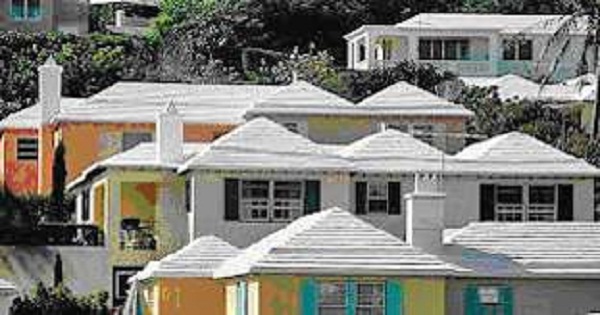
WHITE ROOFS in cities reflect heat instead of absorbing it. This reduces high temperatures in cities that are affected by the “heat island effect.” Studies show that white roofs reduce air-conditioning costs by 20 percent in hot, sunny weather. technorati.com
Whenever I ask people, “What’s the color of your roof?” the most popular answers I get are red, brown, green, blue or orange. It’s very seldom that I get to hear white.
It seems that many homeowners choose the color of their roofs based on purely aesthetic reasons. They want their roof to look like brown ceramic tiles or to look like the roof of a European house they’ve seen in a magazine.
There are some developers who even impose mandatory requirements on homeowners to adopt dark-colored roofs for their houses for the sake of uniformity—again based on aesthetic reasons.
As mentioned in past articles, choosing a dark-colored roof affects the energy performance of your house which translates to high utility bills.
To illustrate this, imagine the surface temperature of a dark roof which can be as high as 80°C on a sunny day. This heat is absorbed into the air space under the roof and continues to build up eventually affecting the rooms below. This heat buildup increases the need for costly air conditioning.
Simple rationale
The rationale for white roofs is quite simple. At the height of summer, particularly in hot humid countries like the Philippines, light-colored clothes keep us cool. The same is true for buildings. White roofs, including white pavements in cities reflect heat instead of absorbing it. This reduces high temperatures in cities which are affected by the “heat island effect,”
Studies show that white roofs reduce air-conditioning costs by 20 percent in hot, sunny weather. White roofs are most appropriate for cities with a year-round warm climate.
White roofs in the US
The California Energy Commission has been promoting white roofs since the 1980s. It claims that converting all the world’s roofs into white roof over the next 20 years could save the equivalent of 24 billion metric tons in carbon dioxide emissions. This is the total emissions of the world last year.
According to a Stanford University report, the land covered by urban areas has doubled between 1992 and 2005. This comprises about 0.128 percent of the earth’s surface. Roofs and roads cover about half of that land.
For a decade now, white roofs are standard equipment for new Wal-Mart stores. More than 75 percent of the chain’s 24,268 outlets in the United States have them.
California, Florida and Georgia have adopted building codes that encourage white-roof installations for commercial buildings. In California, flat-roofed structures are required to have white roofs.
State energy offices and local utilities offer financing for white roofs. The roofs can qualify for tax credits if the roofing materials are approved by the Environmental Agency’s Energy Star Program.
Since white is not the first choice of many homeowners for their roofs, alternative colors can be cream, sienna and gray. They can still yield savings but not as much as reflective white roofs.
Solar reflectance
Based on studies by Lawrence Berkeley National Laboratory and the Oak Ridge National Lab, and the Florida Solar Energy Center, black or dark shingles or roofing materials reflect between 5 and 9 percent of the sun’s rays and have roofs that reach temperatures 25° to 32°C above the air temperature.
A generic white asphalt shingle roofing will have solar reflectance of 25 percent with a 21°C temperature difference and high-grade white tiles or shingles (white clay, concrete or fiber cement)—score at 35 percent and 15°C.
Bright aluminum has the disadvantage of retaining heat through the night.
For comments or inquiries, e-mail [email protected].


