
Quantcast
Latest Stories

SPECIAL REPORT

Transform slums, reduce housing backlog

By

CRISOSTOMO. Photo by Charles E. Buban

(Conclusion)

The mushrooming of slum communities around the country’s urban areas is evident and often becomes a hurdle to the growth process.

But instead of forcefully evicting them or transferring them to far-off locations away from their place of work (as is the usual case), in-situ housing project is perhaps the best method of slum rehabilitation.

“The urban slum dwellers’ plights must be addressed with care. We should provide solutions, especially by showing ways of gainful self-employment on a priority basis so that these slum dwellers will get confidence and move out to decent localities with increased personal incomes,” stressed Subdivision and Housing Developers Association chair Manuel Crisostomo during the group’s annual national convention held in Davao City recently.

He believes the national government and its local counterparts must be proactive rather than reactive in addressing slums and the growth of urban poverty. “New approaches should be developed to integrate slums into cities. If Brazil succeeded in formulating programs that rehabilitated their slums, I don’t see why such model will not work here,” he said.

Purchase land

In Brazil, the government and its partners are helping residents of slum communities purchase the land they live on, formalizing an important asset and catalyzing economic growth.

“This enables the Brazil government to implement much-needed infrastructure such as running water, sewer systems, electricity and paved roads,” said SHDA national president Paul Tanchi citing the experience of the South American country as reported to them by guest speaker Anaclaudia Rossbach, consultant for World Bank on low-income housing settlements and metropolitan management.

Tanchi said that to help realize the plan, government must set aside P24 billion a year to subsidize those families who cannot afford a housing unit.
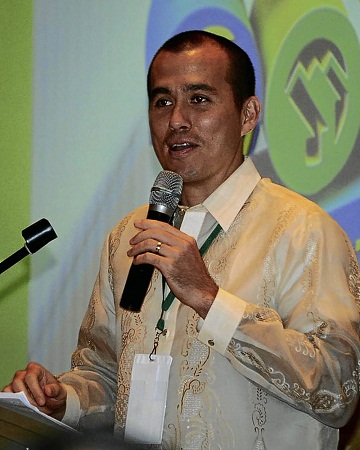
TANCHI. Photo by Charles E. Buban

“It may be costly but such move has implications that go far beyond providing a roof over their heads,” Crisostomo assured SHDA members.

Slums of hope

He added that slum communities, where most of the country’s urban poor live, should be regarded by decision makers as places of opportunity, as “slums of hope” rather than “slums of despair.”

Three million of Metro Manila’s over 12 million inhabitants are living in slums, according to the National Slum Upgrading Strategy (a joint project of the Philippine government and World Bank). Of these 3 million people living amid abysmal sanitation, overcrowded and crude habitation, inadequate water supply and insecurity of tenure, about half a million live in danger areas such as waterways, esteros and under bridges.

Rossbach related that once the appropriate upgrading policies have been put in place in Brazil, slum communities have become increasingly socially cohesive, offering opportunities for security of tenure, local economic development and improvement of incomes among the urban poor.

Rossbach said: “There are many reasons we should help slum dwellers. Assistance to those who cannot afford decent housing removes obstacles the homeless may not overcome on their own. The move presents a better image of the city and even decreases crime rates considering these homeless people may no longer have to steal for food or get money in any way available to them.”

She related that in Brazil, the government spent $44.3 billion (P1.8 trillion) in 2007 to take care of basic sanitation and build houses of several slum communities.

“With land title or a certificate recognizing their occupancy rights confirmed or secured, the Brazilian government was able to levy tax. Rules were set and enforced and even regular streets, schools and clinics were set up, attracting investment. It should be noted that garbage collection is now much easier as residents are now more organized in bringing their own household waste to collection points for pickup,” Rossbach said.

“There is hope. Through the private-public partnership, this country could look forward to reducing the number of families in need of better shelter. What SHDA would like to put an end to is the image of filthy urban environment and violence in the news due to hopelessness of some of these people,” Tanchi said.

He added: “We from the housing industry call on all sectors of society to participate in pushing the roadmap. It may still need some fine tuning but it is a start and with the support and participation of the private, the public and the social sectors, we can turn the 2030 vision into a reality.

This is why during the national convention, SHDA launched the “Housing Industry Roadmap 2012-2030” that recognizes the need to assist slum dwellers (the roadmap is a joint undertaking with the Center for Research and Communication-University of Asia and the Pacific) so they could be provided with more decent housing or better help them acquire one through a financial aid package.

Tanchi said: “We realized that we needed to act now because the current housing demand and supply profile excludes the 832,046 households that can’t afford financing. If left unchecked, existing trends indicate that the total backlog, which has been hounding the country for decades now, could balloon to 6.5-million units by 2030.”

He added that at this rate, the government needs to work more closely with private developers to increase production and streamline the delivery of housing units citing how avoidable flaws in the current setup greatly impede production.


Follow Us


Follow us on Facebook Follow on Twitter Follow on Twitter


Recent Stories:

Complete stories on our Digital Edition newsstand for tablets, netbooks and mobile phones; 14-issue free trial. About to step out? Get breaking alerts on your mobile.phone. Text ON INQ BREAKING to 4467, for Globe, Smart and Sun subscribers in the Philippines.

Short URL: http://business.inquirer.net/?p=86960

Tags: housing backlog , property , resettlement , slum communities

  • http://pulse.yahoo.com/_BAILOH47IAC7D2XUDC7AQSSIU4 Wee

    When peoplelead happy lives, they become more productive.Who will not be happy if you would get your own home? When people are happy, government social costs decrease like fighting criminality, less court cases congestion, etc. Then this country prospers too. I believe there is a big part of the slums who want to live life decently, earning well. Let government give them opportunities like training them on skills, educating them, teaching them effective values. the rest they can take care of.

  • John_Galt_II

    May katangahan tong Crisostomo na to. Brazil pa ang model niya samantalang bankrupt na ngayon yun.

  • http://www.facebook.com/people/Pert-Cabatana/100001481611215 Pert Cabatana

    Singapore, in the 60s, also had a number of slums. They made it one of the top priorities of government to eliminate the slums by putting up high-rise low-cost housing units. It was spearheaded by an entity called the HDB or Housing Development Board. In 20 years or so, they were able to totally eliminate the slums. Our NHA (National Housing Authority) has been in existence for almost 40 years. Our HUDCC (Housing and Urban Development Coordinating Council) has been in existence for 26 years. And our squatter and slum problem solution is still nowhere in sight. Our Housing Czar Binay has been on the job for more than 2 years. And he’s busy using it for building up his own base of election voters and networks.  So, what’s the solution?

  • http://pulse.yahoo.com/_3QBMYPCCPWL5IDWF55BTBVWSAE UPLB-2008-3****

    A problem with this, is the middle-class might revolt because they don’t want these slum dwellers utilizing their hard-earned tax. Come to think of it, it is kinda unfair for them working and then taxed and these tax are spent for housing of these slum dwellers?

    But on the other side of the coin – if done successfully, very beneficial in the long run. No more unsightly squatter areas, less criminals – increased risk appetite for businessmen – more businesses – more jobs – more economic activity.

    So, it all boils down to sacrifice by some of our countrymen. 

    Now, para sa kung sino man ang mag-iimplement – aba, ilista muna ang mga beneficiary bago magsimula ng construction. Wag mag-entertain ng mga bagong iskwater. 

  • UrHONOR

    NATURALand OP KORS! Coming from real estate developers, what else is there to expect?  What father would give his child a snake it food is needed?  Malaking bonanza yang kaisipan na yan sa mga present PRO squatters at future illegal landgrabbers.  O anong sarap ng maging pro squatter…..pag nagkaroon ng housing unit, benta….tapos, squat na naman.  Para ma-control ang pagdami ng daga, gumawa ng maraming lungga!

    • Paglaya09

      Sa pagkakaalam ko sa kasaysayan ng Pilipinas ay karamihan sa mga malalaking lupain ay inangkin lamang ng mga dayuhan. Maaring sa “legal” na pamamaraan (kagaya ng royal grants noong panahon ng Kastila), panlilinlang at sa outright na dahas ng pang-aagaw. Libu-libong ektarya ng lupa ang ipinamahagi ng mga hari’t reyna ng Espanya noong panahon ng kolonyalismong Kastila sa mga kapanalig nito kagaya ng mga religious orders, military officers, public officials at iba pa. Mayruon ding mga lupain na nakuha sa panlilinlang kagaya ng ginawa ng mga Larrazabal sa Leyte. Kunyari ay magbibigay si Senior Poten Larrazabal ng mga “regalo” na cigar pipe at iba pang luxury items sa mga “mangmang” na mga magsasaka at pagkatapos ng ilang araw ay babalik ito at magdadala ng listahan ng mga UTANG ng mga magsasakang akala ay regalo ang ibinigay sa kanila. Meron din namang nawawalan ng lupa dahil sa pagkabaon sa utang. Sabi pa sa isang kasabihan “ang magsasakang nagigipit, sa usurero kumakapit”. Marami pang examples nyan pero ‘di ko nalang iisa-isahin. TANGINA nga naman, ang Pinoy talagang squatter sa sariling bayan dahil sa kawalan ng lupa. Yup! KAWALAN NG LUPA! Maraming mga magsasaka ang napipilitang pumunta at mamuhay sa mga syudad dahil magsasaka nga sila pero wala namang lupang sinasaka. Kung magkakaingin man sila para may matamnan dadamputin naman sila kasi illegal yun. Kung magiging tapasero man silang buong pamilya eh maliit din naman ang sweldo. Noong nakapunta ako sa hacienda nina Lucy Torres sa Ormoc City noong 2002 ay 60 pesos pa ang araw nila noon. Kaya nga ‘wag sana tayong agad-agad manghusga dahil most of the time kahit gaano mo pa kasikap at tiyaga sa trabaho ay sadyang may mga social conditions na pilit na humihila sa kanila paibaba. Oo nga pwede ka namang humanap ng ibang trabaho o ‘di kaya mag-negosyo ka kung may maliit kang naipon pero ang problema ay nandyan parin at ito ang rason na dapat tayong magalit. At hindi sapat ang magalit lang dapat meron din tayong gawin para mabago ang sitwasyong ito. Kung alam mong may mali, ang dapat gawin ay kumilos upang solusyonan ito at hindi ang simpleng pagsasabing “ganyan talaga ang buhay let us just move on”. 

      • UrHONOR

        Salamat sa iyong paglalahad.  Ganyan ang kasaysayan ng karamihang mga bayan na sinakop ng walang pakundangan ng mga dayuhang puti sa pagpapanggap na sila ay tutulong, yon pala ay mga magnanakaw na damuhong.  

    • Carlo Lacanilao

      The only thing clear here is how you seem to think you’re so much better than all these experts.

      • UrHONOR

        SEEM has no value and meaningless.

      • John_Galt_II

        No. The only thing clear is you have no argument!

    • FernandoBusi

      This simply needs proper identification of beneficiaries and data base. You don’t necessarily have to give houses away for free but you could do low cost housing that can be rent to own or mere rental. All it takes if for government to put some money and having a decent good manager implementing things. 

      • UrHONOR

        SOUNDS good to me.  Make “them” work for it and, the greatest assumption is, the authorities would have the funds and the WILL to pursue such project.


Copyright © 2013, .
To subscribe to the Philippine Daily Inquirer newspaper in the Philippines, call +63 2 896-6000 for Metro Manila and Metro Cebu or email your subscription request here.
Factual errors? Contact the Philippine Daily Inquirer's day desk. Believe this article violates journalistic ethics? Contact the Inquirer's Reader's Advocate. Or write The Readers' Advocate:
c/o Philippine Daily Inquirer Chino Roces Avenue corner Yague and Mascardo Streets, Makati City, Metro Manila, Philippines Or fax nos. +63 2 8974793 to 94
Advertisement

News

  • Woman shot dead inside restaurant in Parañaque City
  • PPCRV to investigate slow transmission of vote results
  • After a slight detour, she’s back on track
  • An ‘amazona’ in Manila
  • Center to give research support for K to 12
  • Sports

  • Aces not one and done, says Uytengsu
  • What a class act by Alaska
  • Caluag rules Asian BMX Elite category
  • Emperado claims 2nd GM victim, shares lead
  • Fruitas, Boracay seek semis berths Tuesday
  • Lifestyle

  • Can the ability to bilocate be inherited?
  • Health and beauty questions
  • Evoking in line and color the most popular devotion in the Philippines
  • National Heritage Month revives traditional Santacruzan
  • Philippine ballet’s finest from here and abroad take centerstage in rare one-night gala
  • Entertainment

  • Single Review: ‘Up In The Air’ by 30 Seconds To Mars
  • Arnel Pineda: Journey to go on a hiatus after 2016
  • Heard: Sir Chief on being ‘Papa-ble!’
  • Double victory for Yllanas
  • K-pop’s G Dragon eager for challenge of solo tour
  • Business

  • Asian shares higher on US gains
  • PH approves three new wind farms
  • BIR exceeds April collection target
  • Barclays ups PH growth estimates
  • PH registered BOP surplus of $274M in April
  • Technology

  • Metro’s traffic situation may now be monitored via smart phones, tablets
  • Yahoo! to buy blog-maker Tumblr for $1.1B—report
  • Free Inquirer tablets for lucky INQSnap readers
  • Hong Kong launches first electric taxis
  • DepEd website now up and normal
  • Opinion

  • Editorial cartoon, May 21, 2013
  • Reliance on remittances
  • Shattered bamboo reeds
  • Ideal worlds
  • The sheer inadequacy of single-factor analyses
  • Global Nation

  • Saudi signs accord to protect PH maids
  • Binay urges Taiwan to protect Filipino workers
  • MECO representative in Taiwan asked to explain ‘joint probe’ commitment
  • DOJ chief slams Taiwan ‘murder’ claim
  • To those who say Filipinos are stupid
  • Marketplace
    Advertisement
    © Copyright 1997-2013 INQUIRER.net | All Rights Reserved
    skinner left
    skinner right