
Quantcast
Latest Stories

Net ‘hot money’ inflows slipped in ’12
Outflows rose as Filipinos invested abroad, says BSP

By

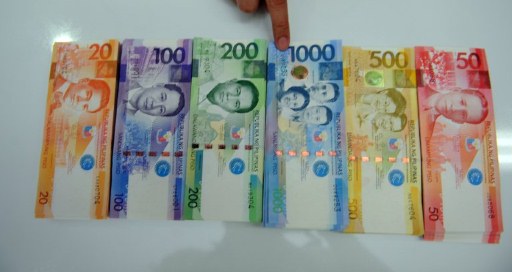
Demand by foreigners for peso-denominated stocks, bonds and other financial instruments helped foreign portfolio investments hit the highest in a decade in 2012, although the net inflow of foreign hot money was down year on year by about 5 percent. AFP PHOTO

Foreign portfolio investments in 2012 hit the highest in a decade as the favorable outlook on the Philippine economy boosted demand by foreigners for peso-denominated stocks, bonds and other financial instruments.

The significant inflow of foreign “hot money” last year came as the Philippines was given better credit ratings, which are now just a notch below investment grade.

The Bangko Sentral ng Pilipinas on Thursday reported that the gross inflow of foreign portfolio investments reached $18.46 billion last year, the highest in a decade. The amount was also up by 12 percent from $16.47 billion in 2011.

“[Growth in foreign hot money] was fueled by renewed interest in securities listed in the Philippine Stock Exchange, coupled with sustained investor confidence on the country’s solid macroeconomic fundamentals,” the BSP said in a statement.

Demand for peso-denominated stocks last year pushed the Philippine Stock Exchange index to record highs.

Meantime, the outflow of foreign portfolio investments from the country grew as well. The BSP said rising liquidity encouraged more locals to invest in foreign currency-denominated instruments.

The outflows reached $14.57 billion, up by 17.5 percent from $12.4 billion the previous year.

Thus, the net inflow of foreign hot money (gross inflows less outflows) reached $3.88 billion, which was down year on year by about 5 percent from $4.1 billion.

The BSP said the rise in foreign portfolio investments is welcome as this helps make the country’s capital markets vibrant.

However, the central bank said hot money could have adverse effects on the economy if these become excessive or if they are not properly managed.

The BSP said portfolio investments that involve speculation on the peso cause volatility of the exchange rate which, it said, is bad for businesses and the economy.

Given this line of thinking, the BSP last year implemented measures aimed at curbing speculative portfolio inflows. If not for the measures, market players believe foreign portfolio investments to the country could have risen even higher.

In early 2012, the BSP imposed a higher capital charge on banks’ holdings of nondeliverable forwards.

In the middle of the year, a regulation prohibiting banks from investing money of foreign clients in the special deposit account facility of the central bank was revived.

BSP Governor Amando Tetangco Jr. has said the central bank is keen on implementing more measures against speculation to help prevent excessive volatility of the exchange rate.


Follow Us


Follow us on Facebook Follow on Twitter Follow on Twitter


Recent Stories:

Complete stories on our Digital Edition newsstand for tablets, netbooks and mobile phones; 14-issue free trial. About to step out? Get breaking alerts on your mobile.phone. Text ON INQ BREAKING to 4467, for Globe, Smart and Sun subscribers in the Philippines.

Short URL: http://business.inquirer.net/?p=103205

Tags: economy , Foreign portfolio investments , hot money , Philippines

  • http://joboni96.myopenid.com/ joboni96

    GOOD

    we don’t need hot money
    of foreigners and carpetbaggers

    our overseas pilipino heroes
    have enough capital

    clueless lang
    ang mga kolonisadong utak
    at collaborators
    sa gobyerno

    DIRECT SALE RETAIL GOV’T BONDS
    TO ALL PILIPINOS

  • Hayek_sa_Maynila

    I bet when this data on portfolio flows is revised next year,  the net inflow figures for speculative flows will look a lot bigger and prove that the 6.8% appreciation of the peso against the USD was due more to speculative factors than structural.
     
    Too bad, the peso’s strength is going to sap the purchasing power of OF relatives, will discourage expansion in the non-voice segment of KPOs (knowledge process outsourcing), will make local tourist spots more expensive to visit, manufacturing less competitive and most importantly it will encourage PHL companies to borrow heavily in foreign currencies which could eventually lead to huge currency mismatches in their balance sheets, similar to the Asian crisis, among others.
     
    By allowing rapid PHP appreciation, our policy makers are choosing to favor speculators over hard working people who come from the real economy.

  • http://pulse.yahoo.com/_AIPSCQM2TZQUMQ5GEIMWMWDFL4 Edward Solilap

    Central Bank and congress doesn’t have any idea how to manage or use these foreign fund inflows then why invite foreign investors to do business in our country.

  • Jun Tuazon

    Most of the foreign money is short term & speculative in nature,they can take this out at very short notice,meanwhile the long term investments of foreigners in the Phils. is abismal owing to the 60/40 law.We can only watch in envy as other countries in the ASEAN inc. Burma & Cambodia gets more of these long term FDI’s than the PHils.


Copyright © 2013, .
To subscribe to the Philippine Daily Inquirer newspaper in the Philippines, call +63 2 896-6000 for Metro Manila and Metro Cebu or email your subscription request here.
Factual errors? Contact the Philippine Daily Inquirer's day desk. Believe this article violates journalistic ethics? Contact the Inquirer's Reader's Advocate. Or write The Readers' Advocate:
c/o Philippine Daily Inquirer Chino Roces Avenue corner Yague and Mascardo Streets, Makati City, Metro Manila, Philippines Or fax nos. +63 2 8974793 to 94
Advertisement

News

  • Benguet town tests Aquino’s order on mining
  • 3-page deal ends strike at Laguna soda bottling plant
  • Aquino help sought vs Cagayan violence
  • NPA rebels free 12 hostages taken in separate attacks
  • Francisca Ponte; 84
  • Sports

  • Lady Eagles rout Lady Bulldogs to draw first blood in V-League finale
  • PH Malditas crush high-ranked Iran in AFC Women’s qualifiers
  • NU’s Dindin Santiago gets V-League first conference MVP plum
  • V-League: Adamson gets 1-0 lead vs UST for 3rd place honors
  • National U makes Fr. Martin Summer Cup semis
  • Lifestyle

  • Yellow chicken fast gaining popularity at Wee Nam Kee
  • Chicken mangosteen curry, papaya salad, soft-shell crabs–Thai cuisine reworked for the Filipino palate
  • ‘Turon’ with ‘panocha’
  • Uncommon curry in a Japanese resto
  • Lucban, after Pahiyas: The divine tastes remain
  • Entertainment

  • New show will have ‘Party Pilipinas’ team
  • Bella Flores Foundation planned
  • A heady dose of indie rock, fashion at Wanderland fest
  • Kapatid wishes Willie well
  • Matt shares bed with Michael
  • Business

  • Coke workers’ strike ends in amicable settlement
  • Lenovo says quarterly profit up 90 percent
  • Switzerland eyes law on frozen dictator funds
  • Survey shows China manufacturing contracting
  • AirAsia net profit falls nearly 40% in 1st quarter
  • Technology

  • Media watchdog criticizes UAE over tweeter’s jail term
  • Twitter tightens security after high-profile breaches
  • Risky behavior starts young on web—survey
  • Office bullying video sparks outcry in Singapore
  • Poll: Teens migrating to Twitter
  • Opinion

  • Editorial cartoon, May 23, 2013
  • False god
  • When neighbors fight
  • Becoming the world’s most bullied
  • Have a heart
  • Global Nation

  • Pope Francis may visit Philippines in 2016—CBCP
  • Asia tension could lead to conflict—DFA chief
  • DOT seeks new markets for Boracay after Taiwan tourists cancel bookings
  • CA stops PH-Japanese contract to develop Nampeidai property in Tokyo
  • Brown hounded for calling Manila ‘gates of hell’
  • Marketplace
    Advertisement
    © Copyright 1997-2013 INQUIRER.net | All Rights Reserved
    skinner left
    skinner right