





A holistic approach is needed to address nutrition concerns


Last May 7, a position was approved for the implementation of a food nutrition requirement initiative. That was commendable and technically correct. But if implemented immediately, the absence of other critical considerations such as economic and social aspects may result in unintentional considerable harm. This will adversely affect agriculture, food security and the welfare of farmers and fisherfolk. A holistic approach must now be added to this excellent work.
On that same day, the National Nutrition Council (NNC) governing board adopted the Philippine National Nutrient Profile Model (PNPM) as the national technical reference for food marketing, regulation, package labeling, fiscal measures and other policy applications.
The levels recommended are correct for the ideal long-term targets. But they should have an implementation timeframe, with the appropriate support plan and budget. In the meantime, holistic work is needed to determine the appropriate required levels today.
Nutrient classification
The PNPM is a government system used to classify food and drinks according to how healthy or how unhealthy they are, based on their nutrient content. Examples are total fat, sugar, and sodium. It is a source guide for packaged foods.
More importantly, it will determine important policies, such as on food package warning labels, deciding which foods schools can sell, additional taxes on unhealthy foods and directing food companies to reformulate their products.
One specific targeted objective is to reduce obesity. However, other factors affect obesity. Examples are access to fresh food, affordable healthcare, nutrition education and the promotion of physical activity.
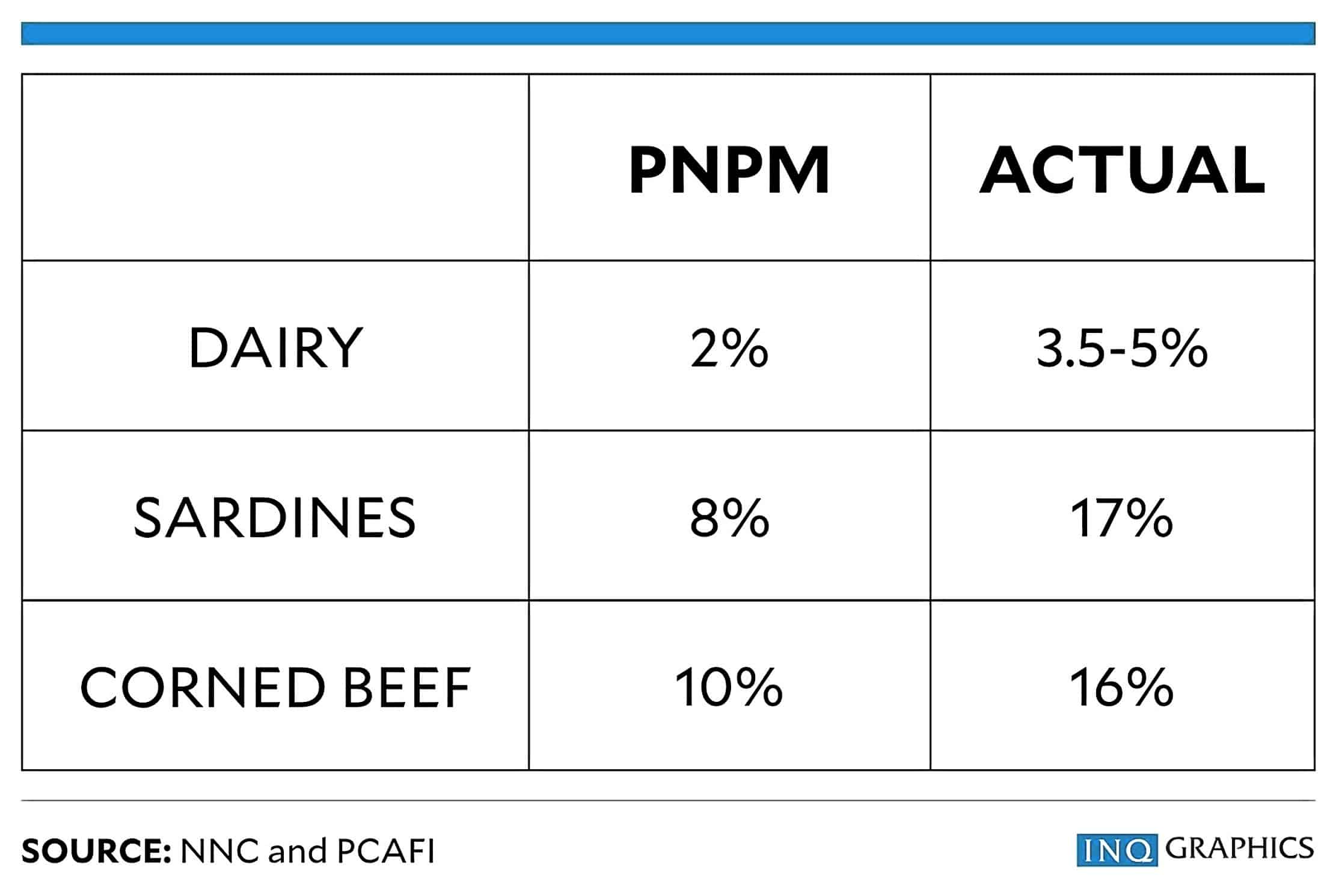
The table shown here compares the recommended maximum PNPM levels compared to our actual situation today.
If these maximum PNPM levels are imposed today, the impact would be disastrous. Products not meeting these levels will have warning labels. This will discourage consumers from buying these products.
Manufacturers will be forced to increase their costs to conform to the PNPM requirements. With higher priced goods, given our average low purchasing power, there will be less available affordable food. With less demand, several manufacturers will close down. This cycle leads to even more hunger.
Official positions
On April 6, Agriculture Secretary Francisco Tiu Laurel Jr. presented the Department of Agriculture (DA) position to the National Nutrition Council: “We respectfully submit that the PNPM in the present form should undergo further technical regulatory, socioeconomic and food system review before it is adopted as a mandatory or punitive regulatory instrument.”
He further stated that the nutrition policy policy should protect health “without unintentionally weakening local food production, food manufacturing, food affordability, MSMEs, farmers, fishers, cooperatives, consumers.”
On May 15, upon learning that the DA position was outvoted by the NNC Board, Danilo Fausto, president of the Philippine Chamber of Agriculture and Food Inc., wrote President Ferdinand Marcos Jr: “The proposed framework heavily restricts prepackaged food without fully considering agriculture production realities, food distribution systems, and manufacturing feasibility. We respectfully recommend that the government allow stronger representation from the food industry and agriculture stakeholders during the technical discussions and calibration of any nutrient profile formation.”
Several of these stakeholders groups were not engaged sufficiently in the technical discussions. Caitlin Punzalan of the Philippine Chamber of Food Manufacturers, Inc. submitted their organization’s position after learning of the NNC recommendation: “To be effective, PNPM must evolve into a data-driven interactive system. Embedding impact assessment ensures policies are scientifically robust, socially acceptable, economically viable, and effective in practice.”
The NNC has done a commendable job in implementing the PNPM model. It must now add to its excellent work in determining the ideal PNPM levels a holistic approach.
This will have to involve more stakeholder participation. Short-term levels for immediate implementation can then be determined. Only then will the PNPM effectively address our challenging nutrition situation today.
The author is Agriwatch chair, former secretary of presidential flagship programs and projects, and former undersecretary of the Department of Agriculture and the Department of Trade and Industry. Contact is [email protected] INQ


