





OECD cuts 2026 PH GDP growth forecast to 3.2%


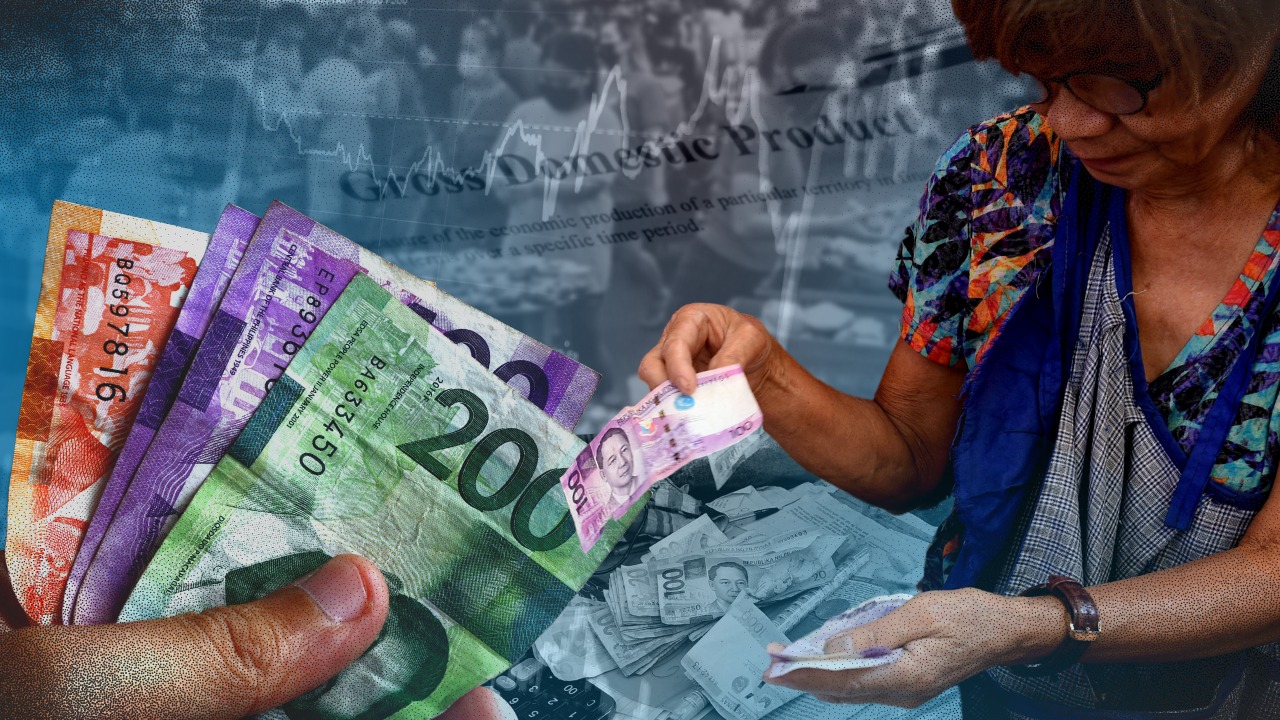
MANILA, Philippines – The Organization for Economic Cooperation and Development (OECD) has slashed its 2026 economic growth forecast for the Philippines, citing mounting inflationary pressures and the fallout from the ongoing energy crisis.
In its latest economic outlook, the OECD cut its Philippine gross domestic product (GDP) growth projection to 3.2 percent this year before rebounding to 5 percent in 2027.
The Philippines is now expected to post the second-slowest growth this year among Southeast Asian economies covered by the OECD’s projections, trailing only Thailand, which is forecast to grow by 1.7 percent.
READ: OECD keeps 5.1% PH GDP growth forecast for 2026
OECD last year projected a 5.1-percent growth for 2026 and 5.8 percent for 2027.
“Private consumption will soften as higher inflation and weaker labor market conditions weigh on real incomes, but public investment is expected to recover gradually following its late 2025 contraction,” the OECD said.
“Inflation will rise amid higher energy prices and the peso depreciation, and the current account deficit will widen. Given the country’s reliance on energy imports, downside risks are mainly related to energy rationing, alongside weaker remittance inflows and uncertainty about the public investment recovery,” it added.
The Paris-based think tank said the Middle East war had been a major drag on the global economy, disrupting the stronger momentum seen at the start of the year. It now expects global growth to slow to 2.1 percent in 2026.
“The evolution of the Middle East conflict remains uncertain, but its economic consequences are likely to be felt for some time even after its resolution. The range of possible outcomes is wide. The longer the disruptions last, the larger the economic and social costs become,” the OECD said.
READ: Trump says Iran talks moving fast despite threat to widen war
If the Philippine GDP forecast is realized, it would mark the country’s slowest economic growth in 16 years, excluding the pandemic-induced contraction in 2020. This would also dip from the already weak 4.4 percent logged in 2025.
The forecast would also fall short of the government’s 5-percent to 6-percent growth target for a fourth straight year.
But economic managers have already signaled a possible downward revision to the official growth assumptions, with the Development Budget Coordination Committee saying recalibrated forecasts are still being finalized.
The OECD’s outlook comes after Philippine GDP growth slowed to 2.8 percent in the first quarter, while inflation accelerated to 7.2 percent in April as higher global oil prices pushed up transport and food costs.
The think tank expects inflation to average 6.8 percent this year, sharply higher than the 1.7 percent recorded in 2025. Meanwhile, the debt-to-GDP ratio is projected to remain elevated at 63.9 percent.
The OECD also expects the Bangko Sentral ng Pilipinas to further tighten monetary policy, with the policy rate rising to 5.75 percent before easing to 5 percent in 2027.
Fiscal policy, meanwhile, is expected to remain expansionary due to energy-related support measures, with the budget deficit widening to 6.1 percent this year from 5.6 percent in 2025, exceeding the government’s 5.3-percent target. INQ


