PAL gets ‘Ba2’ credit rating from Moody’s


MANILA, Philippines — Debt watcher Moody’s Ratings saw a stable outlook for Philippine Airlines (PAL) in its first corporate rating, citing improved financial metrics even as it flagged risks from rising fuel costs and geopolitical conflicts.
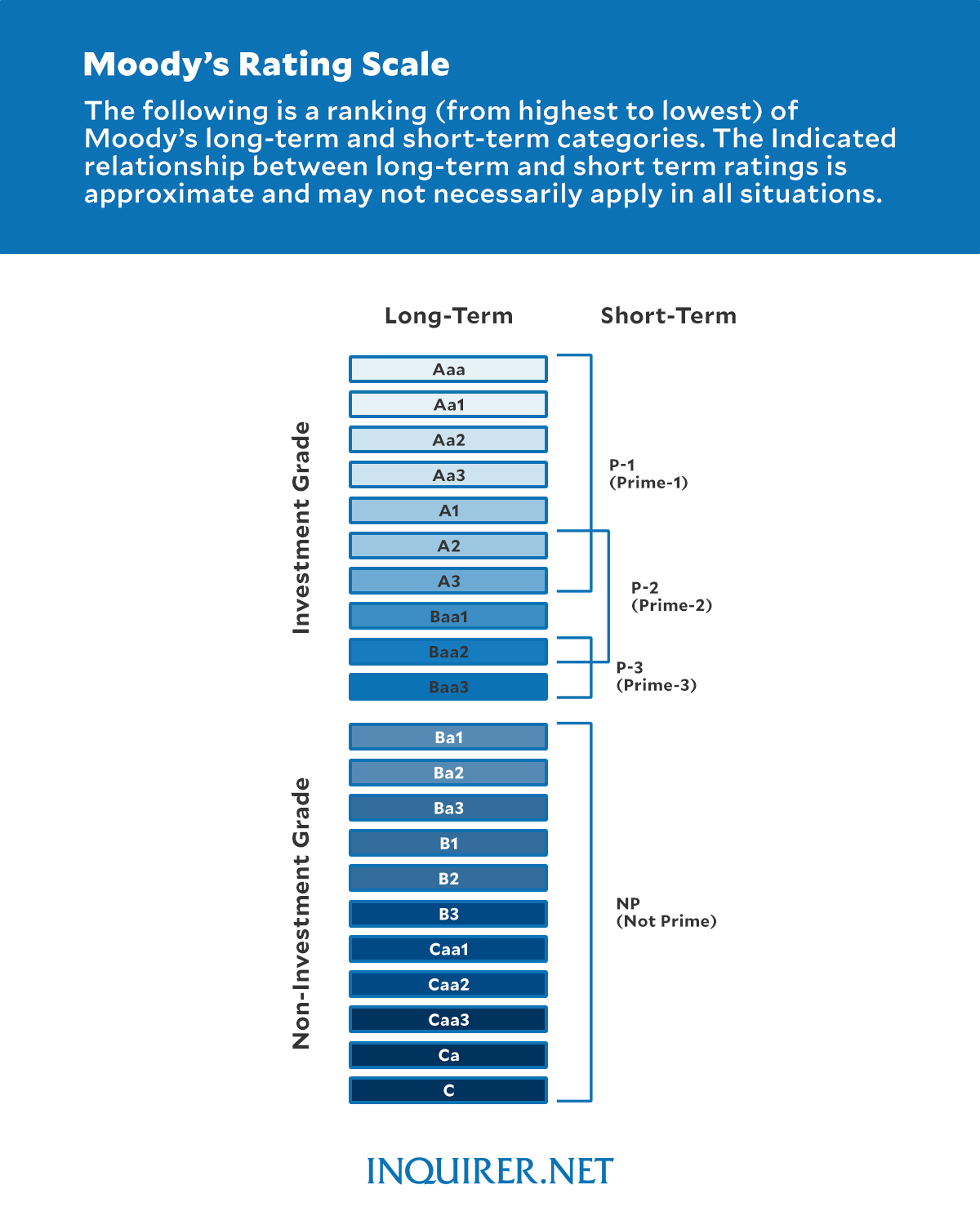
Moody’s gave PAL a “Ba2” rating, which falls below investment grade. Even so, the credit rating agency said the outlook for the airline was stable, meaning its credit profile is expected to remain broadly unchanged over the next 12 to 18 months.
“PAL’s Ba2 rating reflects its position as the national flag carrier of the Philippines, with steady domestic and international market shares and a defensible long-haul franchise,” said Nidhi Dhruv, Moody’s vice president and senior credit officer.
Moody’s noted the airline’s strengthened financial metrics and improved cost and capital structure following its 2021 Chapter 11 restructuring, as well as continued support from its controlling shareholder, the Lucio Tan group.
READ: Jet fuel enough, major airlines assure travelers
Constraints
However, it said PAL’s relatively small scale compared with global peers, sizable fleet expansion plans and limited liquidity buffers continue to constrain its credit profile.
Moody’s expects PAL’s revenues to grow by about 4.5 percent to 7 percent in 2026 and 2027, while earnings before interest and tax margins are projected to remain between 6 percent and 8.5 percent.
While the airline has yet to release its full-year 2025 results, its latest report for the first nine months ended September showed net income rose 17 percent to $159 million, or about P9 billion.
Middle East risks ‘limited’
Dhruv also pointed to PAL’s exposure to the Middle East conflict in the rating’s rationale.
He said that while PAL’s direct exposure is limited — with the region accounting for 11 percent of capacity and 8 percent of revenues — the airline remains vulnerable to higher fuel costs and shifts in travel demand linked to geopolitical tensions.
PAL announced a significant number of flight cancellations to the Middle East over the past month, having suspended select Dubai and Doha services through end-April. It has also indefinitely suspended some flights from Cebu and Clark.
READ: PAL to halt select flights from Cebu and Clark indefinitely
Supply risks
Even so, Moody’s noted that PAL has secured fuel supply through end-June 2026 and is not expected to face near-term disruptions. This is even as supply risks have increased following the Philippine government’s declaration of a national energy emergency.
“Any indication of supply disruptions or restrictions could pressure PAL’s credit profile,” it said.
PAL operates in a duopoly domestic market with Cebu Air Inc., the parent firm of the Gokongwei-led carrier Cebu Pacific. The latter holds about 56 percent market share, while PAL accounts for roughly 30 percent of domestic traffic and 23 percent of international travel.
Looking ahead, PAL plans to expand its fleet with 21 aircraft deliveries between 2026 and 2029, funded through a mix of operating and finance leases. /dda