


Battered peso sinks to new low, nears 64:$1


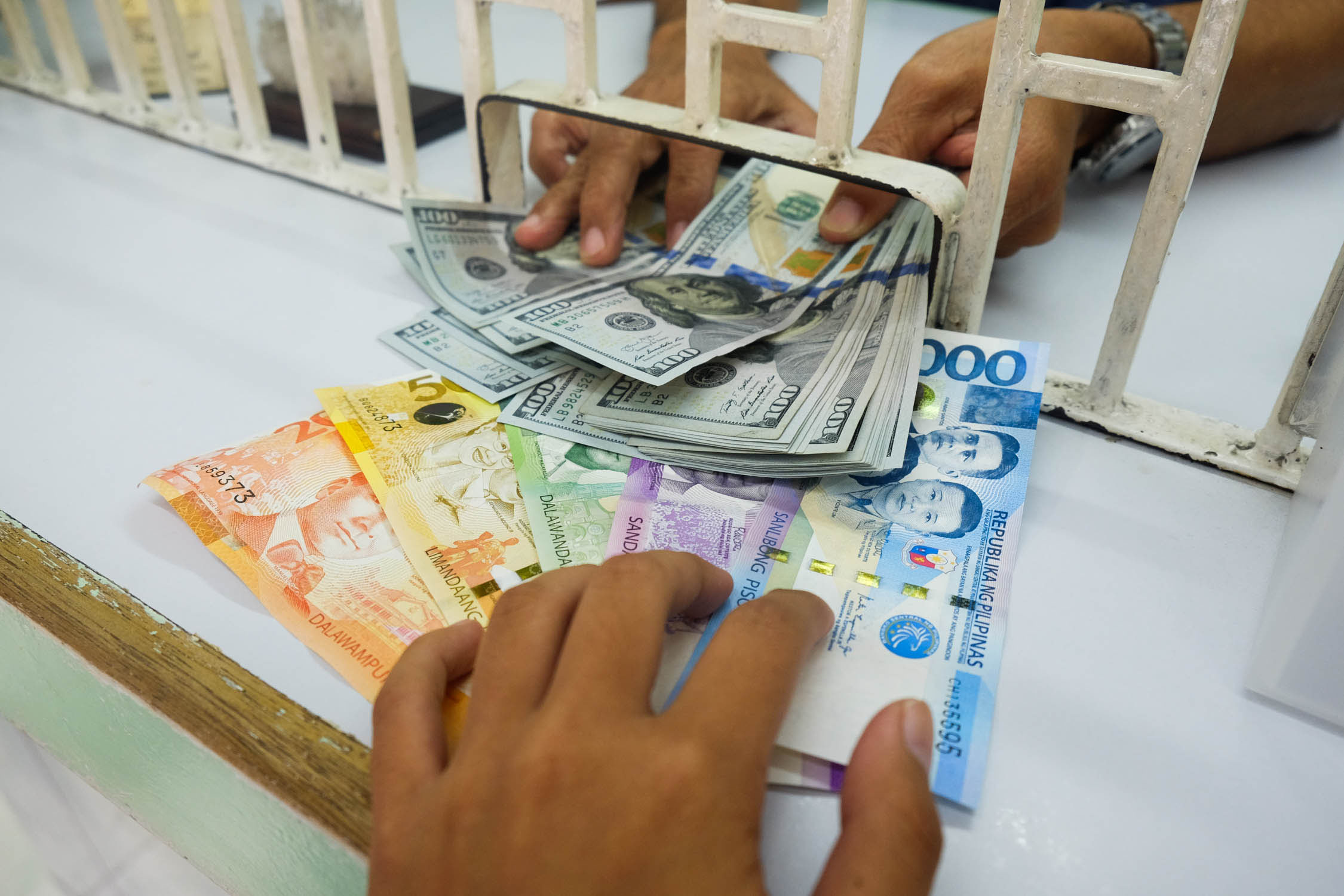
MANILA, Philippines — The Philippine peso extended its losses at the start of a busy trading week, edging closer to 64 per dollar on Monday as investors braced for a series of major central bank decisions amid persistent geopolitical tensions and rising oil prices.
The currency fell 33.5 centavos to close at a record low of 63.95 against the greenback, surpassing its previous all-time low of 63.615 set on Friday, data from the Bankers Association of the Philippines showed.
READ: How will the Middle East conflict affect economies in Asia, the Pacific?
Monday’s close marked the fifth consecutive trading day that the peso had finished at a record low.
Trading volume rose to $1.6 billion from nearly $1.3 billion on Friday.
Five major central banks are set to announce policy decisions later this week: the US Federal Reserve (Fed), the European Central Bank, the Bank of Japan, the Bank of Canada and the Reserve Bank of New Zealand.
Higher oil prices are adding to inflation concerns, complicating the policy outlook for central banks as markets weigh the risk of further rate increases.
A trader said the risk of a peso slide to 64 per dollar remains intact should the Fed adopt a more hawkish tone.
“The ongoing local economic challenges have likewise contributed to the weakness of the peso,” the trader added.
Domini Velasquez, chief economist at China Banking Corp., said higher oil prices over the weekend and US President Donald Trump’s remarks on the possibility of renewed military action against Iran strengthened the US dollar, adding to downward pressure on the peso.
However, the peso’s weakness also reflects eroding investor confidence amid growing concerns that the Philippines could face a period of stagflation, Velasquez added.
“The peso’s trajectory over the past few days suggests that the USD-PHP exchange rate could breach the 64 level in the near term if current pressures persist,” she added.
Last week, the Bangko Sentral ng Pilipinas (BSP) raised its policy rate by 50 basis points to 5.5 percent in a larger-than-expected move aimed at curbing stubbornly high inflation.
The BSP expects inflation to average 6.1 percent this year, considerably above its 3-percent target. It further raised its inflation forecast for 2027 to 6 percent from 5.4 percent, though it expects price growth to ease to 3.3 percent in 2028.
But the peso continued to weaken despite the aggressive rate increase. BSP Governor Eli Remolona Jr. reiterated that the central bank intervenes in the foreign exchange market only to temper excessive volatility that could fuel inflation.
Remolona also stressed that the half-point rate hike was not intended to defend the peso.
Velasquez said higher interest rates alone may not be enough to support the local currency.
“While interest rate differentials remain a factor, we believe the peso’s sustained recovery will depend more on stronger economic fundamentals, improved growth prospects, and renewed investor confidence,” she added.
Nicholas Mapa, chief economist at Metropolitan Bank & Trust Co., said investors remained focused on slowing domestic growth, as higher borrowing costs make investments more expensive.
READ: DOE sees oil price surges amid renewed US-Iran war
“BSP rate hikes will likely be unable to stop supply side inflation, which could mean period of slowflation continues,” Mapa said.
Jonathan Ravelas, senior adviser at Reyes Tacandong & Co., warned that the peso could weaken to 65 per dollar if geopolitical risks and structural economic problems persist. “Unless we address issues on food security, transport, electricity, we need conservation,” he added. INQ


