





Making space for water


A year ago, flooding became the subject of a group study I worked on as part of our sustainability work.
We looked at flooding not simply as a problem of inadequate drainage or flood-control infrastructure, but as a larger challenge involving how land, water, nature, communities and the built environment interact.
I remember coming away from that study thinking that we need to look at water differently. Instead of always finding ways to push it away, we should also find places where it can stay, even if only temporarily. A year later, with flooding still affecting many communities, that idea deserves another look.
Rain garden
Engineered infrastructure remains essential. Drainage systems, pumping stations, dikes and other flood-control measures all play important roles. But we can also ask: What if, instead of only moving water away, we made space for it?
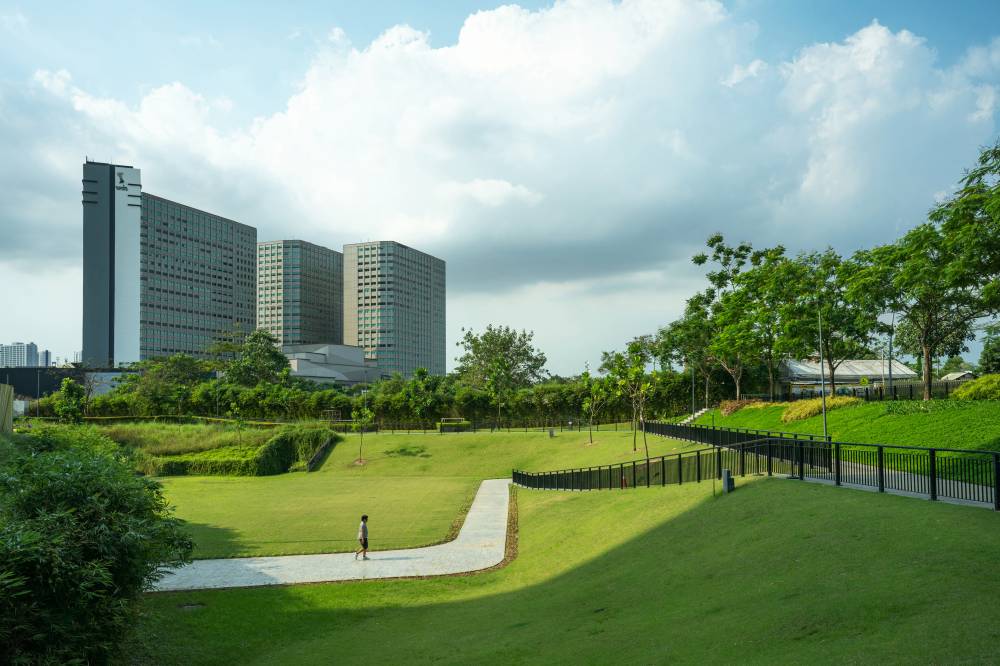
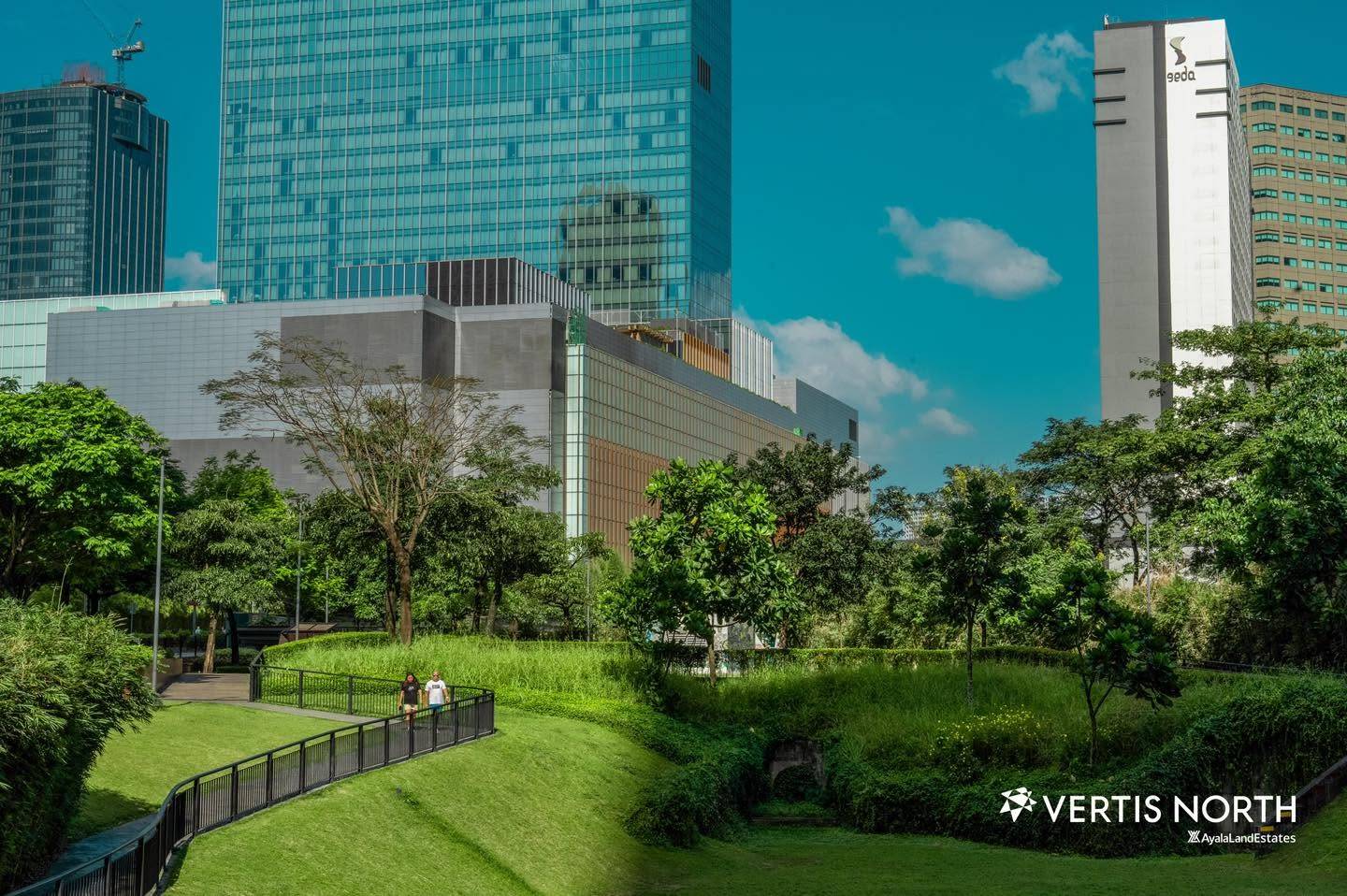
I have seen a good example of this at Vertis North in Quezon City, where our company provided office fit-out consultancy services for a building beside the rain garden.
From our building, we could see how active the park was on regular days. People jogged and walked through it, many with their pets. Community activities took place there from time to time.
The landscaping was thoughtfully planned and well maintained, with broad areas of natural green grass and carefully arranged planting. On an ordinary day, it was simply a pleasant public park.
Then it would rain. The same landscape became part of the site’s stormwater management system.
The rain garden uses infiltration strips along the estate roads to capture runoff, while a central basin can temporarily hold excess water during heavier rainfall. The water is then gradually allowed to infiltrate into the soil.
Park as infrastructure
What I find interesting is that the landscape does not look like flood-control infrastructure. It looks like a park. Landscape is not merely decoration. It can be infrastructure.
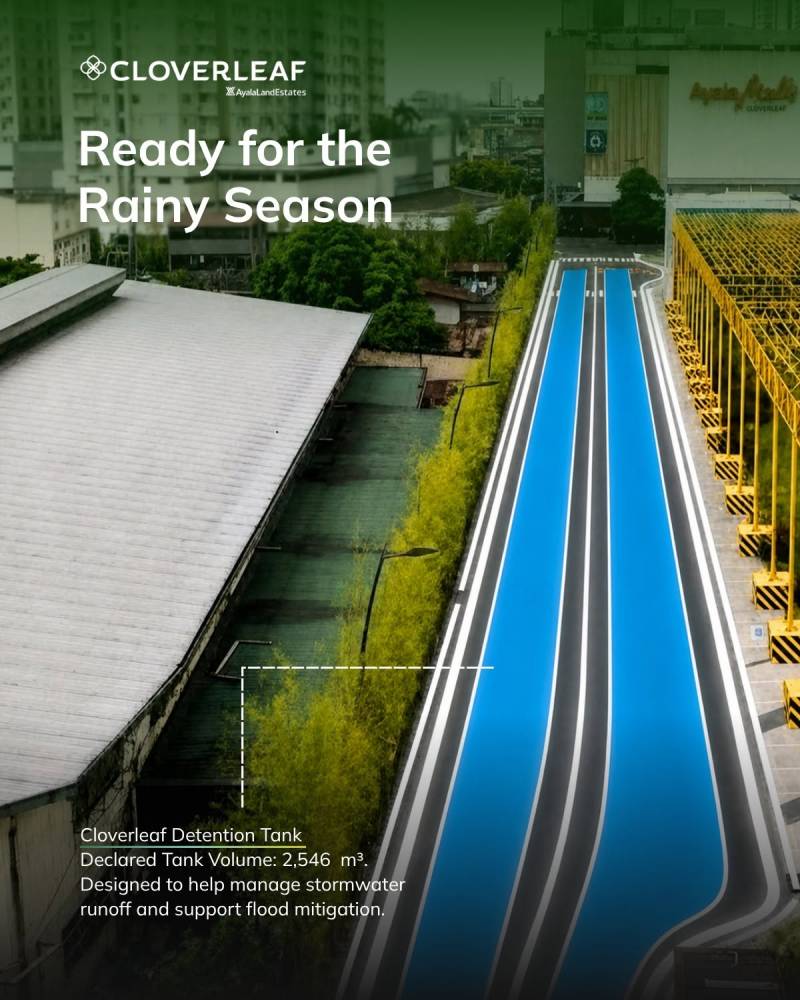
The same thinking can be seen in other developments. In Quezon City, Cloverleaf has a large underground detention tank that temporarily holds stormwater.
In Taguig, Arca South has a larger detention facility
designed to manage heavy rainfall. These are different approaches, but they demonstrate that water management can be incorporated into the planning of a development rather than treated as an afterthought.
Nature-based solutions
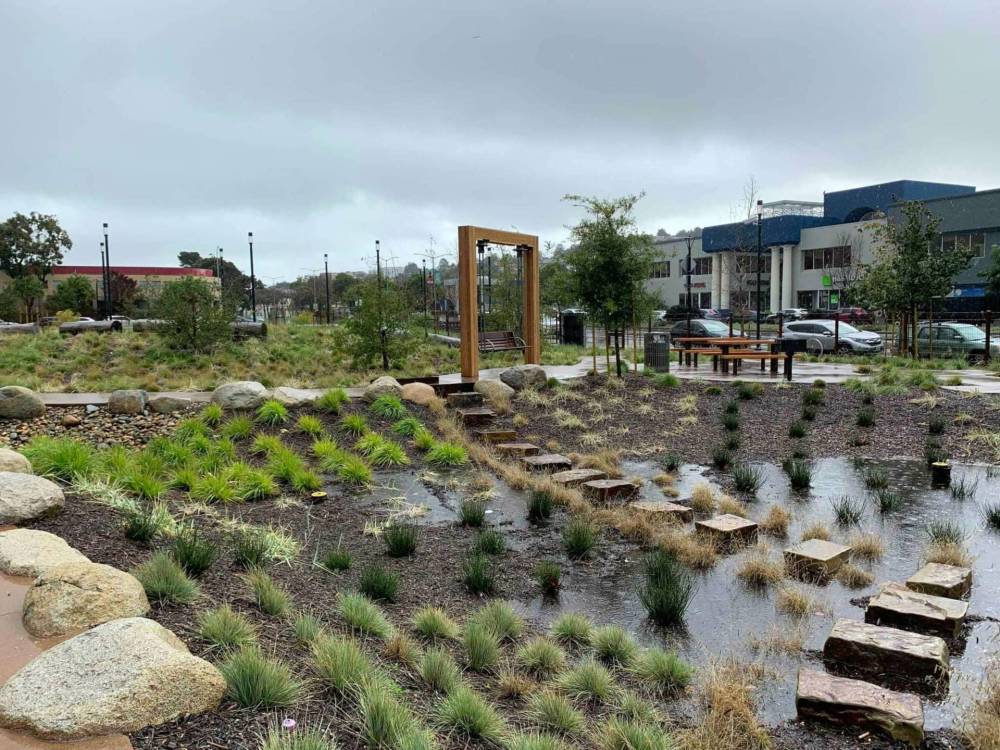
Nature-based solutions can take many forms: rain gardens, bioswales, permeable surfaces, detention areas, planted corridors and restored waterways. Their purpose is not to replace engineered infrastructure, but to give water more places to slow down, infiltrate, or stay temporarily.
This calls for a broader view of what a site can do.
We spend considerable effort making buildings more efficient—using less energy and water and creating better indoor environments. The site deserves the same attention. It determines how rainwater moves, how much heat is absorbed, how much vegetation remains and how much pressure is placed on surrounding drainage systems.
 Simple decisions
 Simple decisions
A development should not only ask, “How do we make this building perform better?” It should also ask, “How can this site help the surrounding area become more resilient?”
The answer can start with simple decisions: a rain garden instead of another paved area, a bioswale along a road, permeable surfaces where appropriate, trees and planted corridors that intercept rainfall, or open spaces designed to accommodate temporary flooding.
These strategies will not eliminate flood risk, especially during extreme rainfall. Their value is in reducing its impact and giving water more places to go.
The lesson I have carried from that study is straightforward: water should not always be treated as something to fight or remove.
Good design can also make room for it. We can design places that make space for water when it arrives.
The author is a LEED Fellow, ASEAN Architect, UAP Fellow and educator with over 25 years of professional practice in architecture and sustainability


