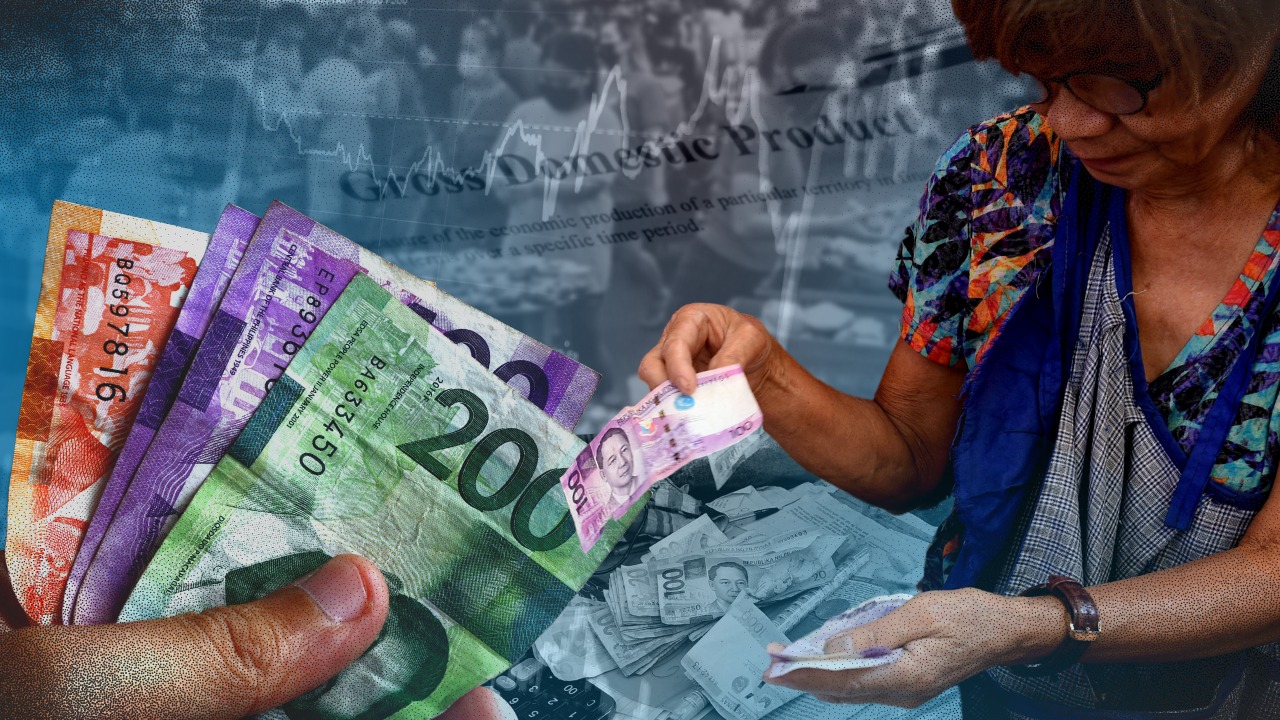
MANILA, Philippines – The Philippine economy is facing an even more sobering outlook this year as both the International Monetary Fund (IMF) and Asian Development Bank (ADB) slashed their growth forecasts, citing mounting fallout from the Middle East war.
In its updated World Economic Outlook, the IMF lowered its 2026 gross domestic product (GDP) growth forecast for the Philippines to 3.9 percent from the 4.1 percent projection it made in April.
READ: S&P cuts PH growth outlook to 4.1%
“This reflects a weaker-than-expected outturn in 2026 first quarter (2.8 percent) alongside a larger-than-expected effect of the war in the Middle East on prices and activity in the Philippines,” an IMF spokesperson said.
Meanwhile, the ADB, in its updated Asian Development Outlook, also downgraded its growth forecast for the Philippines to 3.8 percent from 4.4 percent previously.
“Among major economies in the subregion, the Philippines saw a downward adjustment in growth projections due to delayed investments, softer private consumption amid higher commodity prices and climate-related risks,” the ADB said.
The revised forecast also falls below the 4.1-percent average growth projected for five Southeast Asian economies—comprising the Philippines, Indonesia, Malaysia, Singapore and Thailand. It will also make the Philippines the region’s second worst-performing economy in 2026, ahead of only Thailand, which is expected to grow by 1.9 percent.
READ: DBCC cuts PH 2026 growth target to 3.5-4.5%
Likewise, the ADB’s projection is well below its 4.5-percent growth forecast for developing Southeast Asia. It also places the Philippines second from the bottom in the region, ahead of only Thailand and Brunei, which are both expected to expand by 1.8 percent.
Local economic growth in the first quarter had already slowed sharply to just 2.8 percent, weighed down by the double blow of lingering fallout from last year’s graft scandal and oil shock triggered by the Middle East war.
The weak print pushed the Philippine economy deeper into one of its poorest growth streaks in 16 years outside the COVID-19 pandemic.
At the time, it also fell way below the Marcos administration’s already downgraded growth target of 5 to 6 percent, prompting economic managers to lower the full-year goal anew to just 3.5 to 4.5 percent.
The new forecasts of the IMF and ADB, however, are still within the government’s revised target range.
Meanwhile, these lenders warned that inflation risks remain tilted to the upside.
The IMF expects local inflation to average 4.3 percent in 2026, well above the 3-percent target of the Bangko Sentral ng Pilipinas. However, the projection comes in better than the central bank’s 6.4-percent forecast. INQ