


Leveraging biochar for growing crops


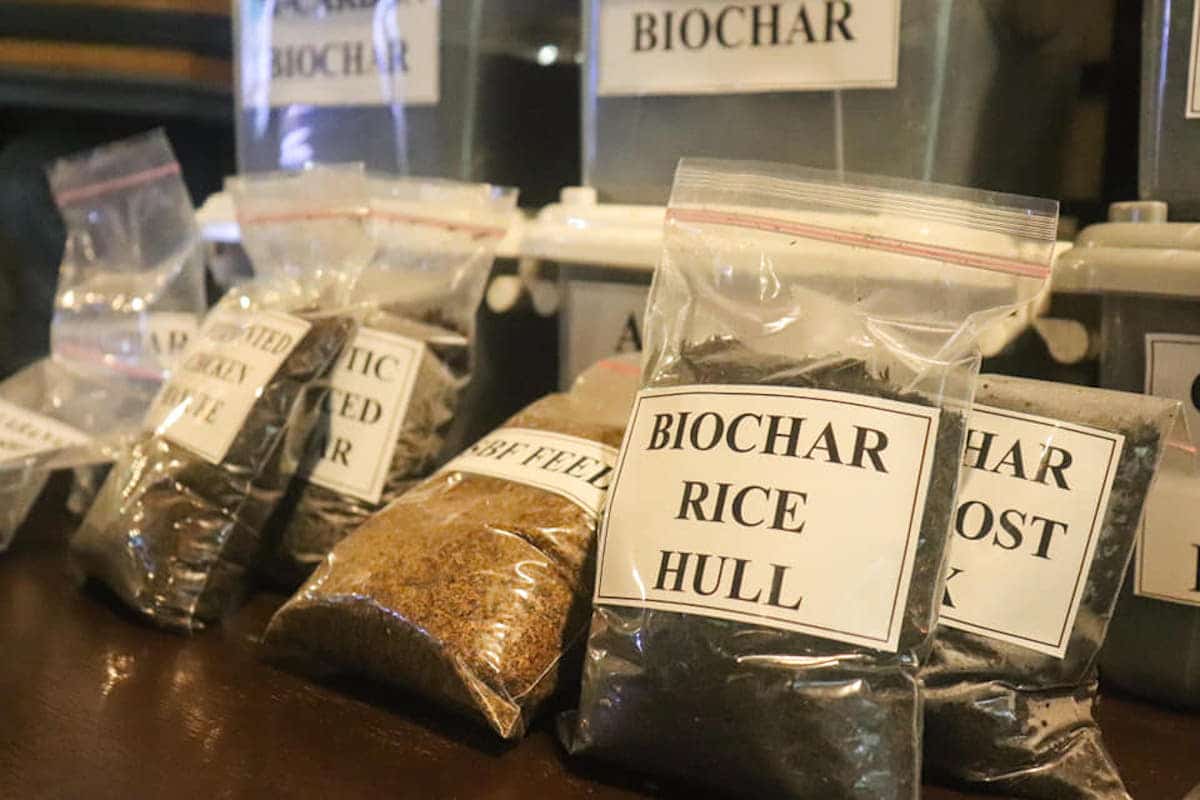
MANILA, Philippines — Because of its wondrous benefits, the government and the private sector should jointly harness biochar as a critical component of a crop-growing strategy. This was the conclusion reached at the Jan. 30 bi-weekly forum of the Agribusiness and Countryside Development Foundation, done in coordination with Management Association of the Philippines, headed by Julius Barcelona.
This technology forum was started by its honorary chair, Ramon Ilusorio, in 2005. It now has a monthly 1,400 worldwide viewership.
After its guest speaker, James Tomell, a Philippine resident who started as a Peace Corps volunteer in Botswana, Africa in 1972, spoke about biochar, we dug deeper into its benefits.
Regeneration International states: “Biochar is a charcoal-like substance that’s made by processing organic matter from agricultural and forestry wastes (also called biomass) in a controlled environment called pyrolysis. This process reduces contamination and safely stores carbon.”
Benefits
In an article by Josiah Hunt and Charlie McIntosh, they summarized results quantifying biochar’s benefits, “representing more than 1,500 scientific studies published between 2016 and 2020.”
READ: Mining firm taps into potential of ‘biochar’
Among them are: (1) crop yield and productivity are increased by 10 percent; (2) plant available water and water use efficiency are raised by 15 percent and 20 percent, respectively; (3) soil organic carbon and available phosphorus are increased by 40 percent; and (4) nitrate leaching and nitrous oxide emission are reduced by 10 percent and 35 percent, respectively.
With these wondrous benefits, we looked for successful biochar applications in the Philippines. We found one in the 30-hectare (ha) nursery of the Kapampangan Development Foundation, Inc. (KDFI) in Bacolor, Pampanga. It is headed by Chair Manuel Pangilinan and President Benigno Ricafort.
With certified coconut hybrid trees as its base, intercropped are various Bureau of Plant Industry-certified plants. Examples are cacao, jackfruit and durian.
In the relatively infertile soil damaged by lahar, biochar is paired with chicken manure to provide the needed soil that will enable the certified plants to grow well. The results are impressive.
Small farmer
Looking for small farmer applications, we found Philip Camara, chair of the Institute of Area Management (IAM) in Iba, Zambales. He submitted a biochar case study with financial returns.
Given climate change, declining soil fertility, low farm productivity and the need to improve small farmer incomes in the Philippines, he argued that this should be implemented in several small farms nationwide.
READ: Biochar making
With guided management, his study showed that a small farmer can create a biochar kiln using the right technology for only P7,000. This involves just using an ordinary drum and hiring a welder. Thirty clustered households provide the organic waste, such as rice hull and straw, corn cobs, tobacco stems, available in the area.
This farmer then processes this waste into biochar using this simple but effective biochar kiln. With 60 sacks of processed waste monthly, the farmer will earn a net income of P30,000.
A second beneficiary is another farmer who will combine this biochar output with fermented manure to create organic fertilizer. This means an additional net P8,500 income for him.
User
A third beneficiary is the rice farmer who will use this inexpensive organic fertilizer, instead of the more costly chemical fertilizer. He then saves P8,500 per ha. An added benefit is the resulting increase in crop yield. Though Camara points to how Iba farmer Rod Gabriel increased his rice yield from 100 to 131 cavans in one ha, let us assume a very conservative 10 percent increase .
This translates to P7,000 in added net income, assuming average palay yield and again, a very conservative P15 a kilo for the farm gate palay price. Consequently, the total increased income for this farmer will be P15,500.
For those interested in large scale biochar implementation, you may call magna cum laude graduate Jonie Simbulan of KDFI (0950-3754569). For those interested in small farmer application, call Philip Camara of IAM (0917-8135508).
There must now be a joint public-private initiative on a nationwide scale to apply this biochar technology. We need this for our agriculture development to reap biochar’s wondrous benefits.
The author is Agriwatch chair, former secretary of presidential flagship programs and projects and former undersecretary of the Department of Agriculture and the Department of Trade and Industry. Contact is [email protected]


