





Gov’t warned vs using agri sector as bargaining chip


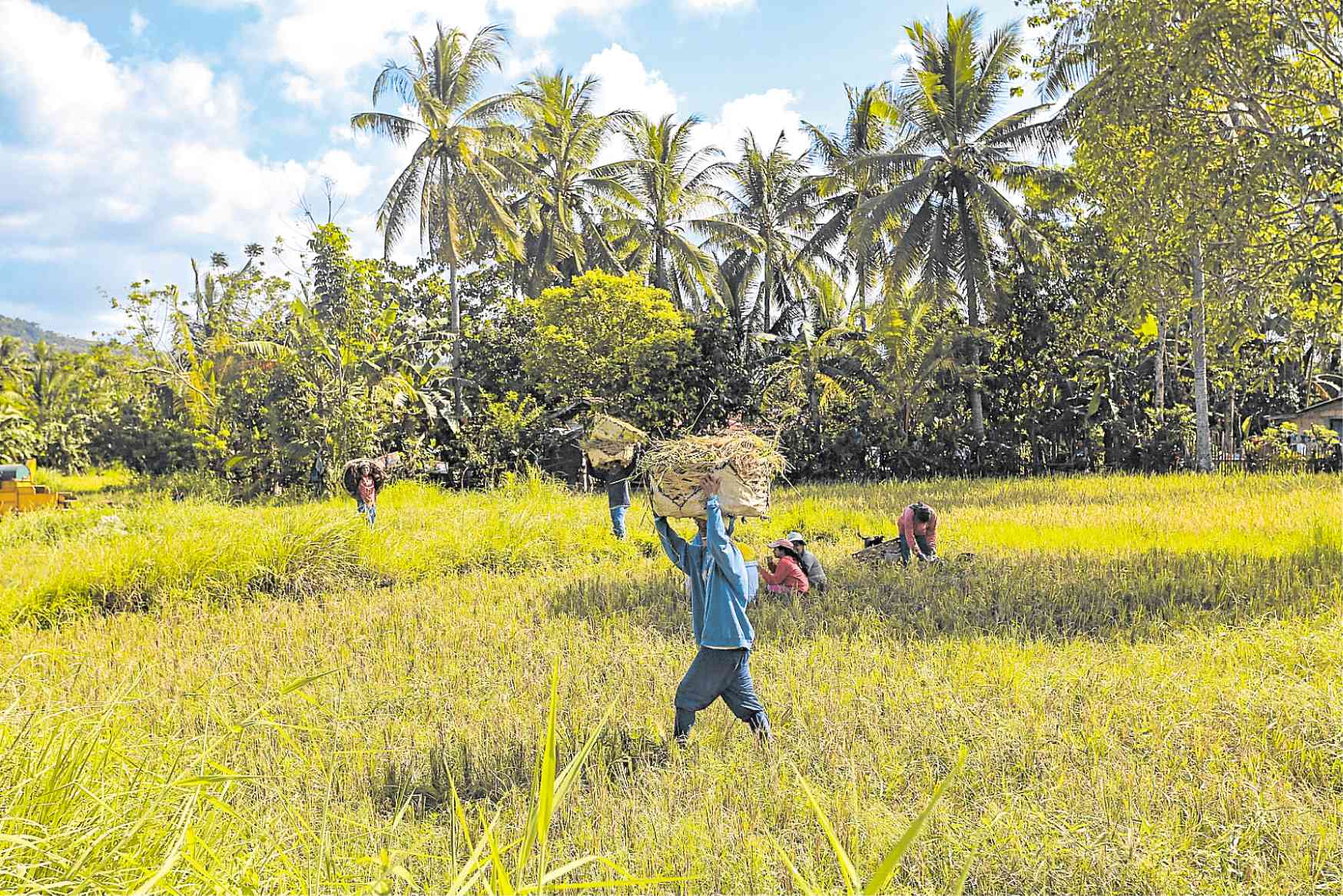
The Federation of Free Farmers expressed concern over the possibility that the agri sector will be used as a bargaining chip in the trade negotiations between the Philippines and the United States —CONTRIBUTED PHOTOS
MANILA, Philippines – The Federation of Free Farmers (FFF) cautioned the Philippine government against using the agriculture sector as a bargaining chip to lower the tariff on Philippine exports, as this could have a detrimental effect on the industry.
“This is not only unfair, but could be devastating, to the country’s farmers and agricultural sector,” FFF national manager Raul Montemayor said in a statement on Monday.
The group issued a statement expressing concerns over the possibility that the Philippine delegation might use the farm sector as leverage in ongoing trade negotiations with the United States.
READ: PH delegation to fly to US to negotiate tariffs, sign possible FTA
“It is very possible that the US will ask for more market access and lower tariffs for its agricultural exports to the Philippines, particularly meats, grains and dairy products,” said Montemayor.
This week, the delegation led by Special Assistant to the President for Investment and Economic Affairs Frederick Go is traveling to the United States to negotiate a more favorable tariff deal with Washington.
The government earlier expressed its concerns over the 20-percent import duty on Philippine goods, which US President Donald Trump communicated to President Marcos in a letter dated July 9.
Although the import duty is the second lowest in the region, next to Singapore at 10 percent, it is higher than the 17 percent announced during the so-called “Liberation Day” in April.
The United States is the country’s leading export destination in 2024, accounting for $12.14 billion or 16.6 percent of the $73.27 billion in export sales, based on data from the Philippine Statistics Authority.
Despite this, the FFF said that farm exports bound for America was equivalent to just one-third of its imports of US farm products, resulting in the latter’s trade surplus of nearly $12 billion.
It also said that the Philippines recorded a trade surplus of nearly $5 billion against the US market, primarily from the shipment of electronic products, such as office machine parts, integrated circuits and insulated wires.
But the FFF pointed out that most of the country’s non-agricultural exports rely on imported inputs and the net trade benefit comes mainly from assembly operations.
On the other hand, agricultural exports are almost entirely grown domestically and generate more value-added and net export revenues.
“Clearly, our agricultural sector cannot be blamed for the US trade deficit and should not be made to pay for it,” Montemayor said.
The FFF said it would be difficult to reverse any concessions offered prematurely in case the US government withdraws the reciprocal tariffs imposed on trading partners.
“Even if the US removes the reciprocal tariffs, we will still be at a disadvantage because other countries are more efficient and can supply cheaper and better quality goods than us,” Montemayor added.
Instead of heavily depending on concessions to promote exports, the FFF called on the Marcos administration to increase government support for the sector by enhancing the competitiveness and productivity of local producers. INQ


