





One World Deli opens in MOA Square


Discover a world of delicious flavors with One World Deli! Since its establishment in 2022, One World Deli has emerged as a neighborhood grocer and café that provides welfare-friendly meats, responsibly sourced seafood, unique pantry staples, carefully curated wine and cheese from around the world, globally sourced charcuterie, and organic local produce. One World Deli pioneered a first-of-its-kind concept in the country, which has already made its mark in the F&B Retail space.
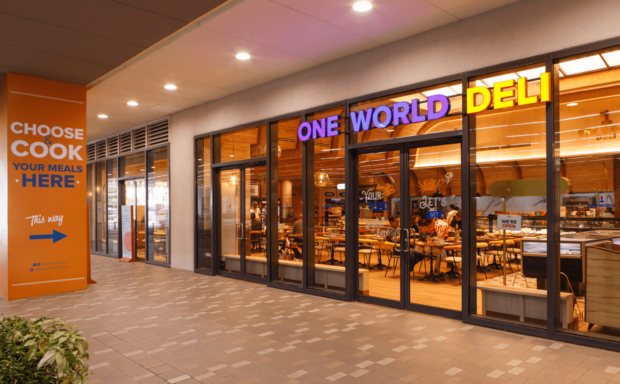
The group recently opened its MOA branch at the ground floor of MOA Square — their third deli to date. Immersed within the confines of the space, one finds resonance with the Battle of Manila Bay, as the ambiance evokes the embrace of a vessel’s belly. Wood panels in a range of hues and textures adorn every inch, enveloping from floor to lofty canopy. The lighting overhead mimics sunlight shining down on a boat’s lower deck. An abundance of dining space beckons, ready to seat avid diners. A private room which can seat as many as 10 people is also available, perfect for business meetings, intimate gatherings, and family dinners.
The Seafood Bar boasts live aquariums with a variety of fish, crabs, and lobsters—bringing the briny depths right to tableside dining. As with the other deli’s locations, a live oyster shower displays a handsome range of fresh oysters sourced from Ireland, the US, and more.
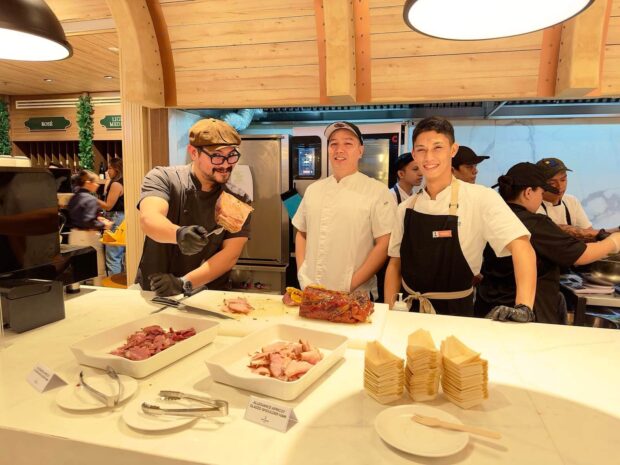
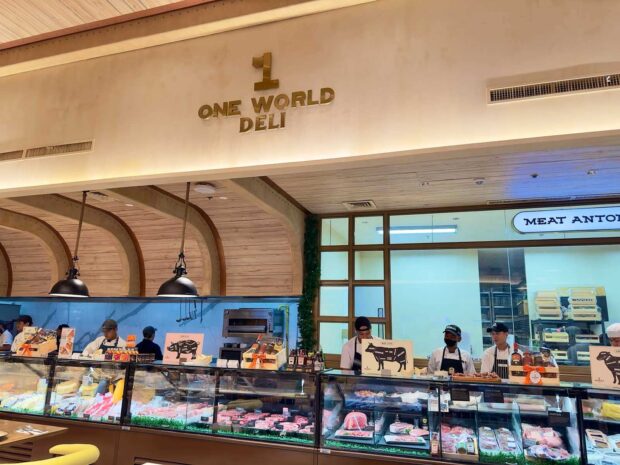
In the Meat Anton section, carnivorous indulgence is front and center. John Stone Beef dry-aged meats from Ireland, black angus beef by Braveheart in the US, Red Duroc pork from Dingley Dell in the UK, as well as Australian lamb from Ovation. Most recently, Satsuma Fukunaga Wagyu has been named Grand Champion for one of the biggest national beef contests in Japan, while Jack’s Creek Beef has been awarded the title of The World’s Best Steak at the 2023 World Steak Challenge!
One corner of the deli features shelves of hand-picked wines and sakes from all over the world, bottles of which can be taken to-go, or enjoyed at the deli.
As the hallmark of all One World Deli locales, diners here have the joy of selection, with their chosen ingredients stoking the chefs’ creative flames, in an open kitchen that runs the length of the dining space. Apart from choosing items to be cooked, an a la carte menu is also available for easy ordering. This particular branch features Daily Deli Meals — hot meals made fresh and updated regularly, which are ready for takeaway and on-the-go dining.
Just in time for the season, One World Deli also has a slew of holiday offerings, which can be seen in this year’s Holiday Guide. Here, one can browse through various gift and potluck ideas that truly express the Christmas spirit. Festive feasts come in the form of platters good for 4–6 people, which can be ordered at least 5 days in advance. Interested diners can give the store a call, order their desired dishes, and they’ll be ready for pickup on their desired dates. Deli Gift Sets are also available for easy gifting, which features deli staples that are arranged into gift-ready packages. Those that wish to curate their own gift sets are also free to do so; simply pick out the desired deli items, and One World Deli’s team will pack and wrap them up for you.
One World Deli MOA sets sail with even more delicious stories to be told within its maritime-inspired expanse.
One World Deli MOA is located at level 1 of MOA Square, Mall of Asia Complex, Pasay City. One World Deli is part of PYC Foods Corporation, which is the company behind such food concepts as Pardon My French, One World Butchers, Fleur, and soon-to-open Japanese concept, Tokugawa.
Follow One World Deli on Facebook and Instagram: @oneworlddeli
ADVT.


