July 10, 2022






There are several reasons why employees leave a company, and it is not usually because of compensation alone. It also works the same way for employees who opt to stick...

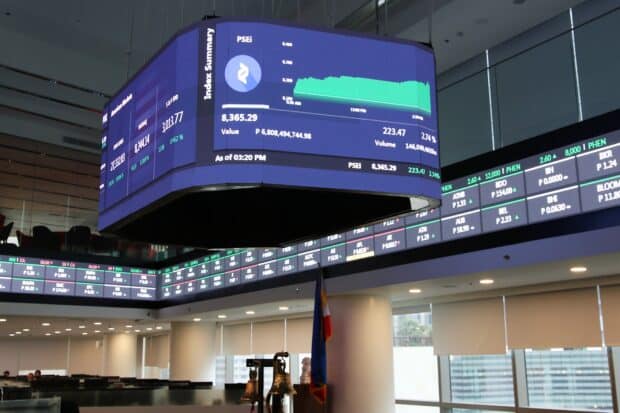
MANILA, Philippines —The Philippine Stock Exchange index (PSEi) opened the trading week in the red. Traders retreated amid the conflict arising between Israel and Iran. The benchmark PSEi slid by...



MANILA, Philippines — Local pump prices are forecast to go down next week following the perceived easing of tensions in the Middle East due to…










TOULOUSE, France—The future of flying, according to flag carrier Philippine Airlines (PAL), is deploying a fleet of modern aircraft that conserves aviation fuel and elevates…




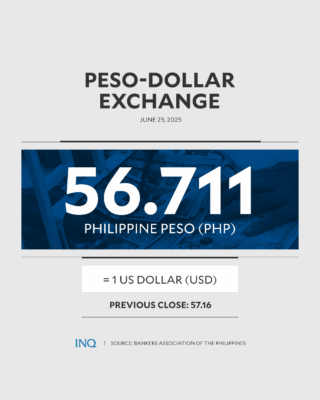
MANILA, Philippines — The Philippine peso on Thursday sank to its weakest level in almost three months, retreating to the 57 level as the US…


HONG KONG, China – Most stocks fell Thursday and oil rose as traders kept a nervous eye on the Iran-Israel ceasefire, while the dollar dropped…


HONG KONG, China – Most stocks fell Thursday and oil rose as traders kept a nervous eye on the Iran-Israel ceasefire, while the dollar dropped…


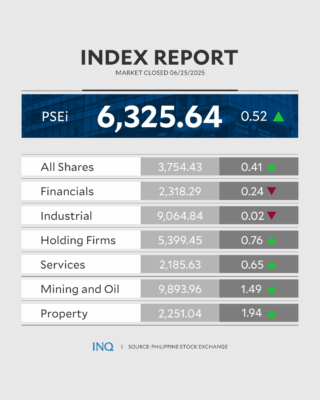

MANILA, Philippines – To support its expansion plans, Union Bank of the Philippines said it has raised P16 billion from its most recent foray into…

This is an information message
We use cookies to enhance your experience. By continuing, you agree to our use of cookies. Learn more here.