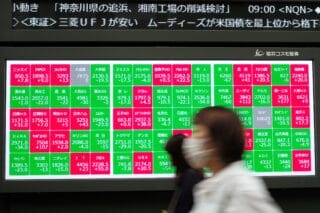
TOKYO -- Asian shares tumbled in early trading Friday as panicked investors dumped stocks after Wall Street set the lead and plummeted to fresh lows on intensifying recession fears, dealers said.
Japan's finance minister called for calm, and markets seemed unmoved by US President George W. Bush's plan to unveil a stimulus plan Friday following more grim economic news.
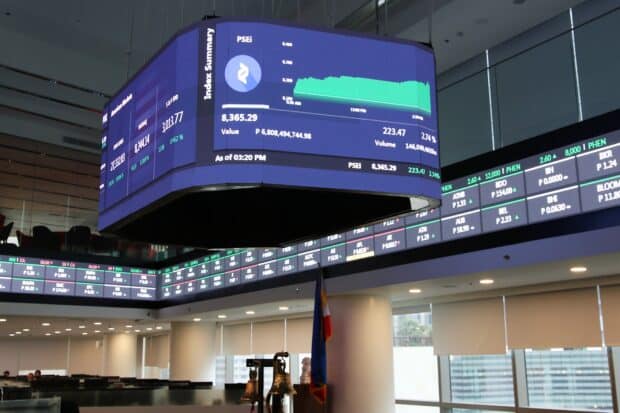
The Tokyo Stock Exchange's benchmark Nikkei-225 index dropped 2.81 percent at the end of its morning session, putting the Tokyo market on course to close at its lowest point since October 2005.
Hong Kong share prices slumped 3.5 percent in opening trade. Losses in Shanghai, which have been seen as relatively insulated from US economic troubles, were capped on expectations of strong earnings among large Chinese banks. The benchmark Shanghai Composite Index fell 0.19 percent.
Seoul and Taipei were both down about two percent while Singapore shares slid 3.0 percent by mid-morning.
Australian stocks, already marking their worst ever start to a year, plunged about 2.6 percent shortly after opening.
"People are panicking. We are seeing a lot of unwinding of carry trades," said Andre Clarke, sales trader at SG Securities in Hong Kong.
In Taipei, President Securities analyst Johnny Lee also reported "panic selling" after the local market opened.
"Market sentiment is overwhelmed by fear," said Ben Kwong, chief operating officer at KGI Asia Ltd in Hong Kong.
"Investors are overly concerned about the subprime crisis, which could weaken the US economy and the global economy as well."
US shares plummeted to fresh lows Thursday as bleak data on housing and manufacturing and a massive loss from investment and brokerage firm Merrill Lynch fanned recession fears and prompted investors to run for cover.
United States President George W. Bush scheduled an announcement Friday on "short-term, temporary measures" to stimulate an economy buffeted by housing and credit woes, a spokesman said.
Ben Bernanke, chairman of the US Federal Reserve, on Thursday backed the idea of a temporary stimulus package and talked of the need for swift action.
Bernanke indicated a stimulus effort could complement the Fed's actions in slashing interest rates to offset the impact of economic woes that, according to some analysts, could provoke a recession.
But dealers said Bernanke's congressional testimony failed to reassure markets and instead fanned concern about the direction of the world's largest economy.
"I could not detect strong willingness on the part of the Fed chief to ward off a recession at a time when the economy, as seen by recent economic data, is decelerating," said Yoshikiyo Shimamine, chief economist at Dai-Ichi Life Research Institute.
As share prices plunged, Japanese Finance Minister Fukushiro Nukaga urged markets not to over-react.
"At this stage, we shouldn't make a knee-jerk reaction," Nukaga told reporters, adding "there are various factors that move the markets."
"We need to look carefully at economic indicators and observe the effects of the US subprime mortgage issue and high crude oil prices," Nukaga said.
Subprime loans flourished at the end of a US housing boom as lenders offered mortgages to people with shaky credit. A subsequent wave of defaults left US and global banks with billions of dollars in losses, leading to tighter credit which squeezed consumer and business spending, threatening the overall economy.
Asian banks were among the losers, with HSBC sliding 3.80 Hong Kong dollars or 3.2 percent to 115 and Mizuho Financial Group down 12,000 yen or 2.5 percent to 471,000 in Tokyo.
A strengthening yen against the dollar also soured the mood in Tokyo. Japanese exporters benefit from a weak currency.