

Quantcast
Latest Stories

Finally, a cleaner jeepney

By

THIS looks like the traditional jeepney on the outside…
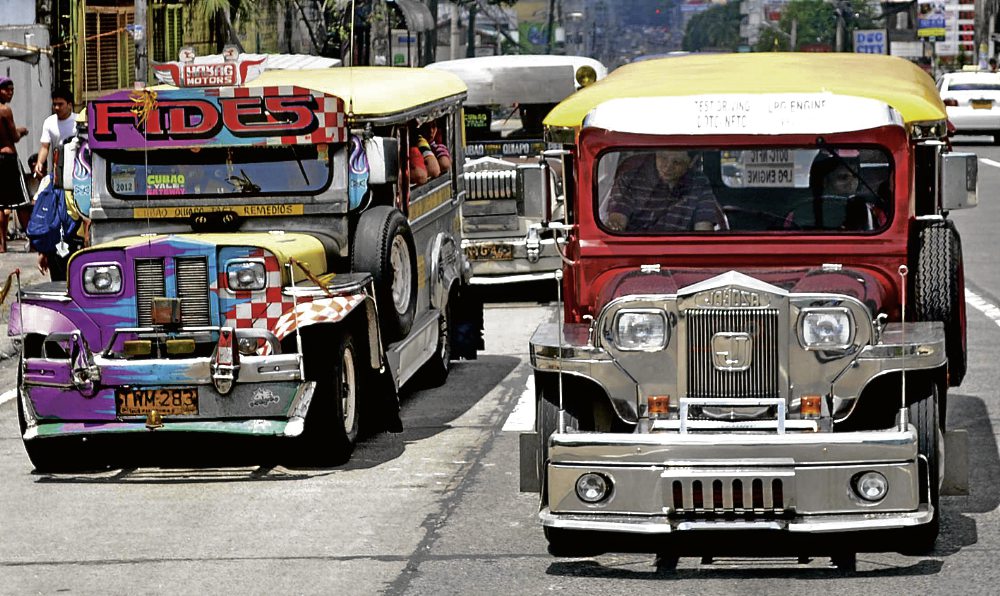
OLD (left, traditional jeepney) vs new (right, LPG jeepney): LPG power makes the jeepney cleaner and more fuel-efficient. But can operators be convinced?

The Philippine jeepney is at once the pride and the curse of Philippine roads. It stands as a source of pride because of the ingenuity that it represents: the conversion of a military vehicle into a popular mode of transport. On the dark side, setting aside the resistance to road rules of many so-called professional drivers, the jeepney is, sadly, a badly outmoded vehicle. The high ground clearance may be ideal for rough roads and flooded streets, but the stoop-inducing ingress and egress, discomfort of the side-facing seats, and exposure to the heat and pollution will not have anyone taking the jeep if a suitable alternative is around. As for the pollution aspect, it is apparent from the clouds of smoke they emit, that a lot of jeeps are major sources of particulates that cause environmental damage and ill health. Smoke belching is a sure indication too of inefficient use of fuel. Any replacement for the jeepney must tackle all of these negatives if this four-wheeled “king of the road” is to survive—and if we are to survive it.
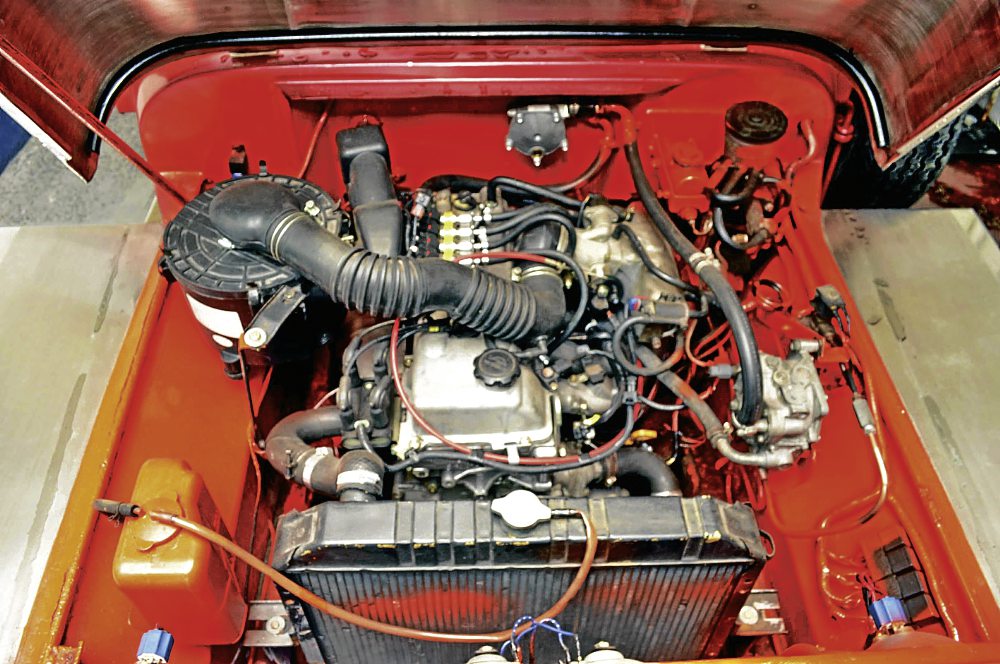
…but it’s powered by a Toyota-derived engine fed by LPG.

Here and now, a company is set to improve at least one aspect of the jeepney: the most important part, its drivetrain. A company called GoLPG will be launching a program designed to offer jeepneys a cleaner, more efficient alternative power plant fed by liquefied petroleum gas (LPG), or propane. The objective of the project is to promote retrofitting of jeepneys with an LPG-fed engine or, alternatively, to offer a new chassis and body fitted with the LPG engine. By using LPG engines, the jeepneys are expected to have lower smoke emissions and thus potentially be more environment- and health-friendly.
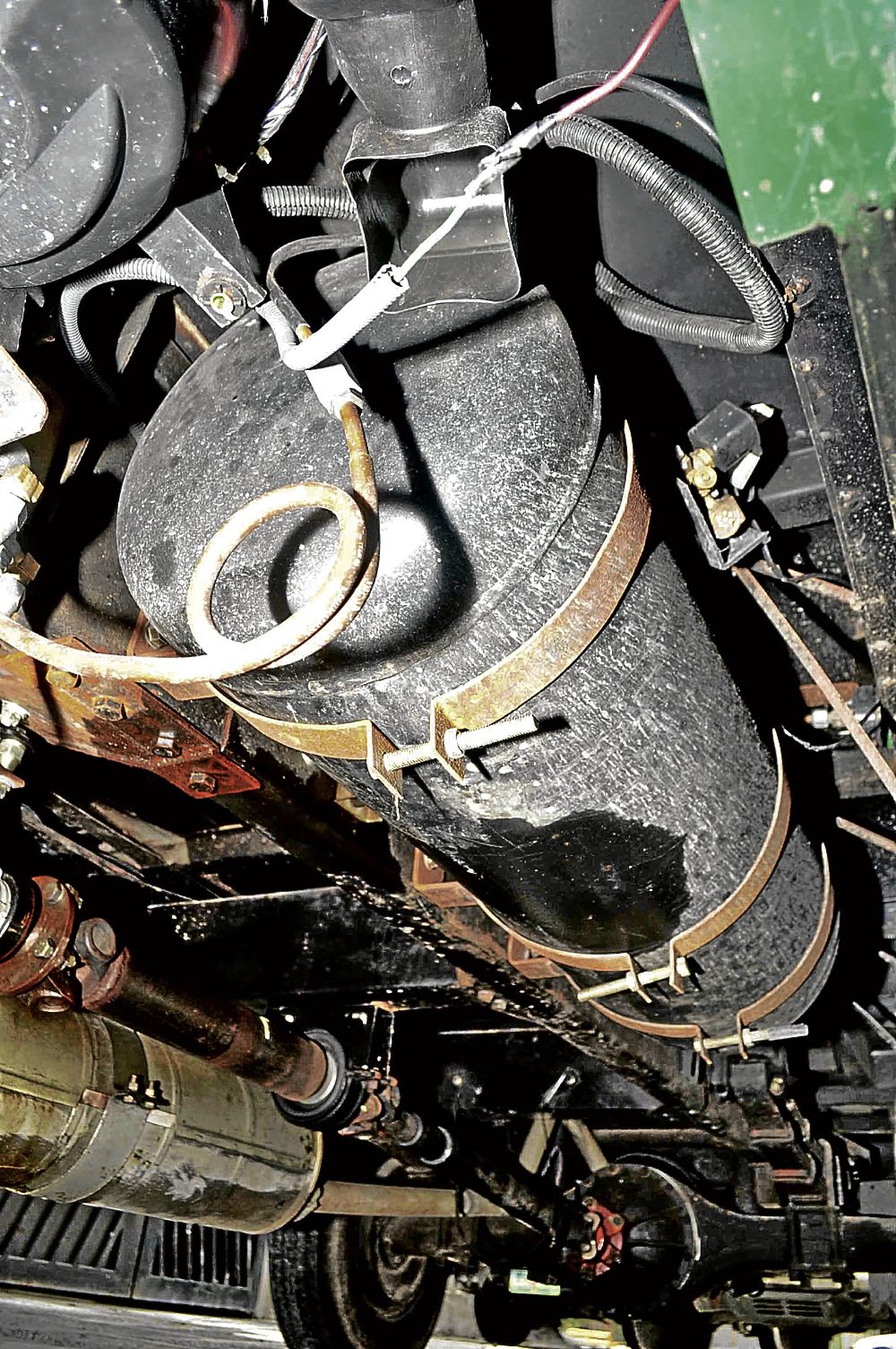
THE LPG storage tank is located under the chassis in the truck-based model.

Traditionally, jeepneys have used diesel engines. This is because diesels deliver the torque necessary to propel the heavy steel-framed vehicles as well as a full load of passengers. Correspondingly, diesel fuel is taxed less because it is used by public-utility vehicles, making the retail price cheaper despite the higher cost of the fuel itself in world markets. Shifting jeepneys from the antiquated and heavily polluting diesel engines that they are currently running to potentially cleaner gasoline engines is thus nearly impossible.

This is where LPG fuel comes in. As taxi fleet operators and owners of cars with large-displacement engine know, LPG is an alternative to diesel and gasoline, as it is cleaner-burning than gasoline, and cheaper than diesel. Although it has a higher octane rating than most gasoline variants at 102-108 RON, LPG has a lower energy density, making equivalent fuel consumption higher. Offsetting this potentially higher cost is the cheaper cost per liter of LPG. Currently, LPG is selling for about P33, while diesel is retailing for about P44.

The GoLPG jeepneys we rode in came in two versions. First is the model with the traditional jeepney body: square hood, upright windshield, long passenger compartment. Tucked under the left-hand passenger bench seat is a 57-liter LPG tank. The driver’s compartment is also typical, except for a small LED panel that indicates the amount of LPG left in the tank. The larger model, based on a truck chassis, has the tank tucked under the body. Both models can seat up to 23 passengers. The truck-chassis model has the advantage of a shorter overall length and a turning circle smaller than that of the RMS Titanic. Its engine is tucked under the tilt cab.
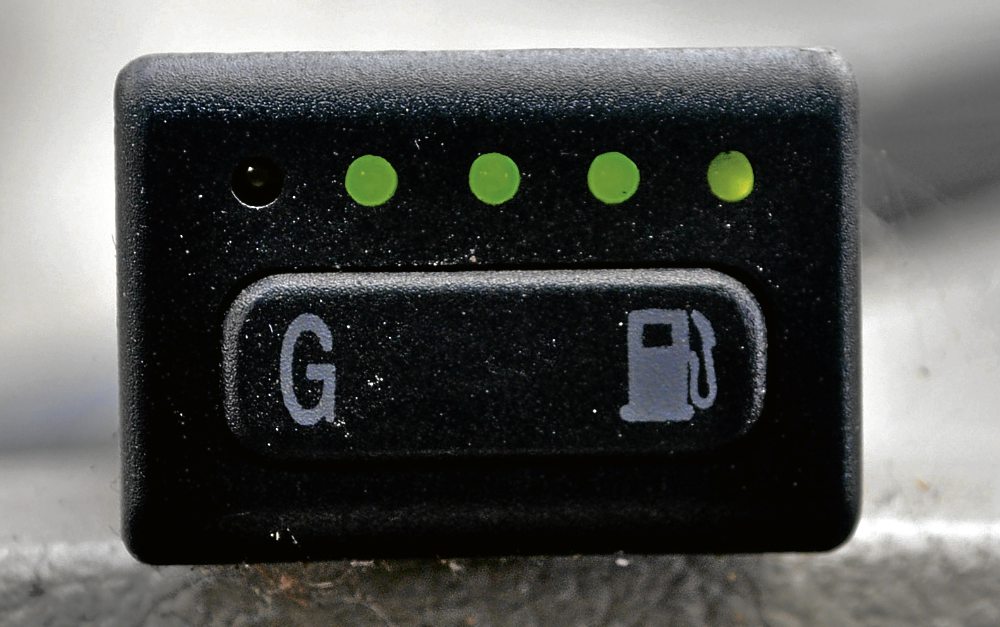
GAUGES indicate fuel level.

That engine is an inline-four DOHC 16-valve powerplant, designated a 4RB2, a derivative of Toyota’s 2RZ engine. The 2RZ is a 2.4-liter engine with a 95 mm bore and 86 mm stroke. This design lends itself to good torque delivery. The gear ratios of the transmission have been selected to optimize drivability and reportedly result in smoother delivery of power compared to the traditional diesel powertrains. “Hindi hirap,” is how our driver put it. Rated power is 136 hp and torque 217 Nm. Previously seen in applications like the Toyota Hilux and Hiace, the engine design is alive and well and being used by various vehicle manufacturers. As used in the LPG jeepney, GoLPG has recorded fuel consumption of 7.5 km/liter, with a full load of 23 passengers in city driving.

TUCKED under the red vinyl seat is an LPG tank.

The engine complies with Euro III emissions standard, while the Philippines is currently following the Euro II standard. (A jump to Euro IV is mandated for 2016.) GoLPG recorded its LPG jeepney at 83 HC (hydrocarbons) and 0.69 CO (carbon monoxide). The Philippine emissions standard requires 800 HC and less than 1 in CO. Most jeepneys apparently fail to pass these standards and yet are plying the roads, merrily pumping the air full of sweet pollutants.

The LPG jeepney faces several challenges. First is the cost of engine and transmission, estimated at P350,000. Some companies, notably Isuzu, embarked on a vehicle repowering business with mixed results. Although the individuals and companies who changed their engines met with better reliability and reduced operating expenses, the takeup was not as wide as expected. The “new look jeepney” based on the truck chassis will cost about P1 million. It will have the advantage of being built from all brand-new components, compared with the surplus parts that are used by many jeepney builders. Installation of an engine and transmission package, including testing, will take about two weeks.
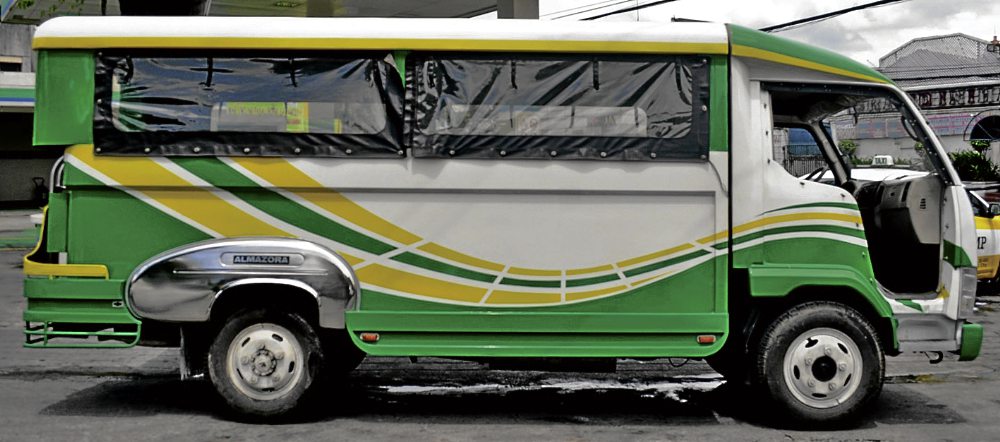
AN ALTERNATIVE to the traditional jeepney body is the truck-based jeepney. It’s shorter and more maneuverable, with power steering to boot. PHOTOS BY ARNOLD ALMACEN

GoLPG will be presenting the LPG-powered jeepney to the National Federation of Transportation Cooperative, which will test the vehicle for a month. The company plans to get approval from the Department of Transportation and Communications, Department of Energy, and Department of Environment and Natural Resources, as well as bring on board financial institutions that can provide the necessary funding for the jeepney operators. The financial aspect is critical, as the initial cost is no doubt prohibitive for customers.

The jeepney has long been associated with Philippine motoring, in the way that the tuktuk has been identified with Thailand. While Thailand has been phasing out the tuktuk, not allowing new ones to take to the road, the jeepney plays a more crucial role in our local transport. Despite the presence of more efficient mass transport like light-rail trains, the final kilometers are usually traversed by jeepney. The key to keeping the jeepney alive—and us to breathe easier alongside them—is to modernize this vehicle, and the option of an efficient LPG drivetrain may be a step in the right direction.


Follow Us


Follow us on Facebook Follow on Twitter Follow on Twitter


Recent Stories:

Complete stories on our Digital Edition newsstand for tablets, netbooks and mobile phones; 14-issue free trial. About to step out? Get breaking alerts on your mobile.phone. Text ON INQ BREAKING to 4467, for Globe, Smart and Sun subscribers in the Philippines.

Short URL: http://business.inquirer.net/?p=81636

Tags: Design , Environmental Issues , Jeepney , Motoring

  • jtpa

    What about scrapping the whole Jeepney idea as a public transport !?  I think that is a better idea.

  • jasme

    Very bad idea.  Kapag dumami na ang gumagamit ng LPG, tataas na ang presyo nyang LPG (Law of supply and demand).  Kaya di lang mababale wala ang expected savings sa LPG fueled vehicles, kundi apektado pa ang buong mamamayan na gumagamit ng LPG sa pagluluto dahil magmamahal na ang gamit pangluto.

    Besides, LPG is not widely used in vehicles and some reports suggests that LPG is actually damaging to vehicles as it is not fitted by the vehicle manufacturers.

    The only way forward as of now are the electric or hybrid vehicles.

    Now if only I can elaborate on my idea about electromagnetic powered cars for recyling power for infinite power supply…God knows.

  • http://pulse.yahoo.com/_W5CBI5UE5XETQ3VSBPTTT3I3ZU michael

    i think this project should be handled by a government agency for it to be successful.  baka barubalin lang ng mga jeepney drivers yan eh.

    another is dpat point to point and byahe…

  • pinaskngmajal

    Its time to faceout this polluter jeepneys engine,its time also to stop importing these surplus engines from japan, china and korea, (mga basura nila)and most of all its time to modernise all puv,encourage these big car companies to modernise our number one puv (jeepney)in affordable cost and enviromental friendly.

  • http://pulse.yahoo.com/_GUZISWUMVDD5QJUC7GBJKEM7XA prangka

    LPG is not really that effective.  In the long run there would be more engine problems coming out than when conventional fuel is used.  That’s what I learned from a taxi driver employed in a company operating big taxi franchise. Most of the cabs operating on LPG were undergoing overhauling to revert back on conventional fuel. Hindi na sila gumagamit ng LPG ever.

  • tabingbakod

    In much of the wealthier countries, public transport (except for taxis) is run by a government agency. With a large organization comes plenty of resources, so there are regular maintenance, proper training, ability to hire experts and capital to buy vehicles. The quantity, routes, stops, timing of vehicles are well managed and controlled. Drivers get good pay no matter how manny passengers he gets and he only has to worry about driving and the safety of passengers, not maintenance, not efficiency, not profit nor pollution. No rival vehicles fighting over passengers.

    They are not perfect in that they are heavily subsidized by the government and still more expensive to ride than our jeepneys (partly because in rich countries, people like to drive their own cars). Much like our LRT system which are heavily subsidized as well. Some may say jeepneys are subsidized because we keep diesel prices artificially low.

    So the big innovation could be that public transportation sould be publicly owned. One company controlling one system. Then the possibility for cleaner, more comfortable, safer jeepeney will be closer.

  • kismaytami

    It’s not just pollution that is problematic with jeepney transportation. A much bigger problem is absence of discipline and courtesy among among jeepney drivers. Even if jeepney emission smells like jasmine, it will still not have a good effect to the economy, since jeepney drivers will still continue to pester the flow of road traffic.

  • Parigi

    The more important issue is not only about “cleaner” mode of transportation, but the capability of the mass transport system to provide adequate load capacities at cheap cost. Like what had been pointed out, the “jeep” was a temporary conveyance after the war which ended more than 65 years ago. We actually need more efficient and safer public transport. If you observe, most jeeps use old tires and engines that have been already discarded from other countries. I’m wondering why the Philippines keep on importing those trashed Izuzu engines for those jeeps? Those drivers on “boundary” who will lose their livelihood can learn new skills under TESDA or return to their provinces, where jeeps may still be used. The country should focus on building more LRTs and improving the bus operations. For example, a bus can load the equivalent of six jeepney passengers and it runs on one engine rather than using six engines for the equal number of jeepneys.

  • sinoo

    If the government really wants to implement this, they should offer a subsidy and require it for all jeepneys by a reasonable date. Also just as they did with diesel, they will have to regulate the price because of the inevitable corporate greed guised as common economic sullpy vs. demand.


Copyright © 2013, .
To subscribe to the Philippine Daily Inquirer newspaper in the Philippines, call +63 2 896-6000 for Metro Manila and Metro Cebu or email your subscription request here.
Factual errors? Contact the Philippine Daily Inquirer's day desk. Believe this article violates journalistic ethics? Contact the Inquirer's Reader's Advocate. Or write The Readers' Advocate:
c/o Philippine Daily Inquirer Chino Roces Avenue corner Yague and Mascardo Streets, Makati City, Metro Manila, Philippines Or fax nos. +63 2 8974793 to 94
Advertisement

News

  • Power of Oklahoma tornado dwarfs Hiroshima bomb
  • NPA rebels release 6 hostages
  • Leni Robredo visits House
  • Woman gives birth in LRT train
  • Postponing barangay, SK polls is illegal, says lawyer
  • Sports

  • Spurs blow late lead, beat Grizzlies in OT
  • Cavaliers win NBA Lottery Draft again
  • Bobcats seek to regain Hornets nickname
  • Clippers part ways with coach Del Negro
  • Injured Murray withdraws from French Open
  • Lifestyle

  • Should we parents keep secrets from our kids?
  • Creative sisters concoct a Pinoy-themed treat for Mother’s Day
  • Has the helmet law been forgotten so soon?
  • Globe Tattoo and Stöckinger: Powerful, speedy team-up
  • The pope and the devil: Is Francis an exorcist?
  • Entertainment

  • Wanderland 2013: A moment of ‘Sweet Disposition’
  • Justin Bieber’s pet monkey becomes ‘German’
  • Tardy star makes supporting actor lose job
  • TV5 wishes Willie Revillame ‘well in new pursuits’
  • Ai-Ai de las Alas plans to file for divorce
  • Business

  • Philippines, Brazil agree on new flights
  • Oil down in Asian trade
  • US stocks rise ahead of Bernanke testimony
  • Macau hosts Asia’s largest gaming expo
  • Prudentialife pPlan holders want liquidation deferred
  • Technology

  • Poll: Teens migrating to Twitter
  • Microsoft readies new Xbox as entertainment hub
  • Yahoo! vows not to ruin Tumblr after $1.1B takeover
  • Yahoo! confirms Tumblr deal for $1.1B
  • Mobiles offer financial lifeline to Asian migrants—study
  • Opinion

  • Editorial cartoon, May 22, 2013
  • Stranglehold
  • Dark side
  • Philippine elections split rather than unite
  • Admin, European business group not on same page
  • Global Nation

  • Taiwan reporter sacked over Philippine hoax
  • Saudi, PH ink pact on workers
  • Civil groups taking poll plaints to UN
  • Aquino bares AFP buildup vs ‘bullies in our backyard’
  • Taipei releases satellite record, rejecting Manila’s claim
  • Marketplace
    Advertisement
    © Copyright 1997-2013 INQUIRER.net | All Rights Reserved
    skinner left
    skinner right